Mexico · Visited November 2024 · 2 weeks
Mexico City for Digital Nomads
A vast highland capital that's best taken one neighbourhood, and one street taco, at a time.
World-class street food · Huge coworking scene
By James, founder of Nomad Register · Updated November 2026
Mexico City at a glance
- Overall
- 7.4/10
- Work setup
- 8/10
- Walkability
- 7/10
- Value
- 6/10
- Safety
- 7/10
- Lifestyle
- 9/10
- Living costs
- About MXN 20,000 a month before rent
- Tourist stay
- Up to 180 days for British, EU and US citizens, at the border officer's discretion
- Nomad visa
- No dedicated visa, but temporary residency for up to 4 years
- Time zone
- CST (UTC−6) all year, no clock changes
- Currency
- Mexican peso (MXN)
- Internet
- Fibre is widespread, with a national median of about 117Mbps
- Airports
- MEX (Benito Juárez), about 5km east of the centre, and NLU (Felipe Ángeles), about 35km north
- Population
- About 9.2 million (city), 21.8 million (metro)
- Plugs
- Types A and B, 127V
Climate: Mild all year thanks to the altitude, with a dry season from November to April and heavy rain from June to September (best month: November). Jan 9–22°C, 12 mm rain; Feb 10–24°C, 6 mm rain; Mar 11–26°C, 12 mm rain; Apr 13–28°C, 24 mm rain; May 14–27°C, 59 mm rain; Jun 14–26°C, 133 mm rain; Jul 13–25°C, 174 mm rain; Aug 13–25°C, 176 mm rain; Sep 13–24°C, 158 mm rain; Oct 12–24°C, 71 mm rain; Nov 10–23°C, 17 mm rain; Dec 9–22°C, 5 mm rain
Overview
Don't let the monster scare you off
Mexico City is enormous. Around 9.2 million people live in the city itself and almost 22 million in the wider metropolitan area, all of it spread across a high valley 2,240m above sea level. It's so big that it's sometimes known as El Monstruo, the monster. The trick to enjoying it is to stop thinking of it as one city. CDMX, as everyone calls it, is divided into 16 boroughs, known as alcaldías, and each of those is made up of colonias, or neighbourhoods, with their own markets and personality. Most remote workers head straight for Roma and Condesa in the central borough of Cuauhtémoc, where the cafés and coworking spaces cluster, but they're only a small part of the story.
We spent two weeks here in November 2024, at the start of a long stretch through Latin America, balancing work with Spanish lessons and plenty of exploring. After a hectic first week in a hostel in the Centro Histórico, we moved south to Mixcoac, a calm residential neighbourhood in the borough of Benito Juárez, and loved every moment of it. We deliberately didn't base ourselves in Roma or Condesa, which felt over-gentrified and full of laptops, and we came away convinced that the city's reputation for danger does it a real disservice. In our experience it's no more dangerous than any other big capital.
Two years on, the gentrification we noticed in Roma and Condesa has moved to the centre of city politics. Rent rises have been capped at inflation since a 2024 change to the civil code, and hosts of short lets now have to register with the city. After protests against gentrification spilled onto the streets of Condesa in July 2025, the mayor announced a wider plan to keep neighbourhoods affordable, and a new tenancy law was still before the city's congress in November 2026. None of that changes much for a visitor staying a month, but it's worth knowing that in the most popular colonias, the welcome for nomads isn't as warm as it was.
For a first stay, aim for a month, because two weeks only scratches the surface. Spend your first days seeing the sights in the centre and exploring Roma and Condesa, then put down roots somewhere calmer, such as Mixcoac, where the streets feel safe and you'll hear far more Spanish being spoken. November is our favourite time to come, though the week around Día de Muertos is crowded and expensive.
Plastic chairs and messy tacos
"Once you settle into the Mexican way of life, you'll find yourself sitting on a plastic picnic chair at a busy intersection, eating the messiest tacos with your hands, and your life will never be the same."
James, founder of Nomad Register
Mexico City suits you if
- you live to eat and think the best meals come from street stalls
- you want enough museums and day trips to fill a month of weekends
- you work with North American teams, as the city runs on Central Time all year
- you'd like a big choice of coworking spaces wherever you end up living
It's less suited to you if
- you can't stand traffic, which is some of the worst we've come across
- you're hoping for bargain Latin American prices, as CDMX is one of the region's most expensive cities
- you're sensitive to altitude or air pollution, which can be poor in the dry season
- you want a compact city you can get to know in a week
At a glance
Work setup · Great · 8/10
Mexico City has a huge coworking scene, from WeWork's 13 locations to small local spaces, with more than 200 listed on one directory alone, so you'll find a desk near wherever you stay. Fibre broadband is widespread, and our download speeds averaged a solid 82Mbps. It loses points because the cafés in Roma and Condesa are packed with laptops, and working from small independent cafés isn't something we'd encourage.
Walkability · Good · 7/10
Individual colonias such as Condesa and Coyoacán are a pleasure to explore on foot, with tree-lined streets and parks around every corner, and the Ecobici bike-share covers much of the centre. The city as a whole is far too big to walk, though, and the traffic is so bad that walking is often quicker than a taxi for short trips. Getting across town can easily take 45 minutes.
Value · Fair · 6/10
Street food is still a bargain, with a taco al pastor costing around MXN 20 to 25 and a Metro ride just MXN 5. In our experience, though, Mexico City is one of the most expensive cities in Latin America, especially in Roma and Condesa, where average asking rents run well above MXN 20,000 a month. Prices double or even triple around Día de Muertos, and American-style tipping has crept in too.
Safety · Good · 7/10
In our experience, Mexico City is no more dangerous than any other big capital, and Benito Juárez, where we stayed, is one of the safest boroughs in the city. The main risk is petty and opportunistic crime, and the Centro Histórico is best avoided late at night. Both the UK and US governments advise extra care, mainly around taxis and theft, so use ride-hailing apps rather than hailing cabs on the street.
Lifestyle · Excellent · 9/10
There's truly something for everyone here, from world-class museums and ancient pyramids to the canals of Xochimilco and street food that's on another level. On Sundays, the city closes dozens of kilometres of roads to cars so people can take to the streets on foot or by bike, and you'll need at least a month to see the best of it.
Plan
Getting there and getting around
Most flights land at Benito Juárez International Airport (MEX), usually known by its Spanish initials, AICM. It sits about 5km east of the centre and has two terminals, with non-stop flights from London Heathrow on both British Airways and Aeroméxico. Some flights now use the newer Felipe Ángeles International Airport (NLU) in Zumpango, about 35km north of the city, which is a much longer trip into town, so check which airport is on your ticket before you book.
From the airport
The simplest option is an authorised airport taxi. You pay a fixed fare in advance at the official counters inside the terminal, then take your ticket to the taxi rank, which saves any haggling or uncertainty after a long flight.
Uber and DiDi drivers aren't allowed to pick up inside the airport zone, so you'll need to walk to the official pick-up points outside. From Terminal 1, that's on Boulevard Puerto Aéreo near the Terminal Aérea Metro station, and from Terminal 2, it's on Avenida Fuerza Aérea Mexicana. Allow time for the walk, which isn't much fun with heavy bags.
By Metrobús or Metro
Cheapest
Line 4 of the Metrobús, the city's bus rapid transit network, runs from the airport into the Centro Histórico. The airport fare is MXN 30, and you can't pay in cash, so tap a contactless bank card or a phone wallet, or buy an MI travel card first. The Terminal Aérea station on Metro Line 5 is a few steps from Terminal 1 and costs just MXN 5, but the Metro is busy and awkward with luggage, and we'd save it for when you're travelling light.
Getting around the city
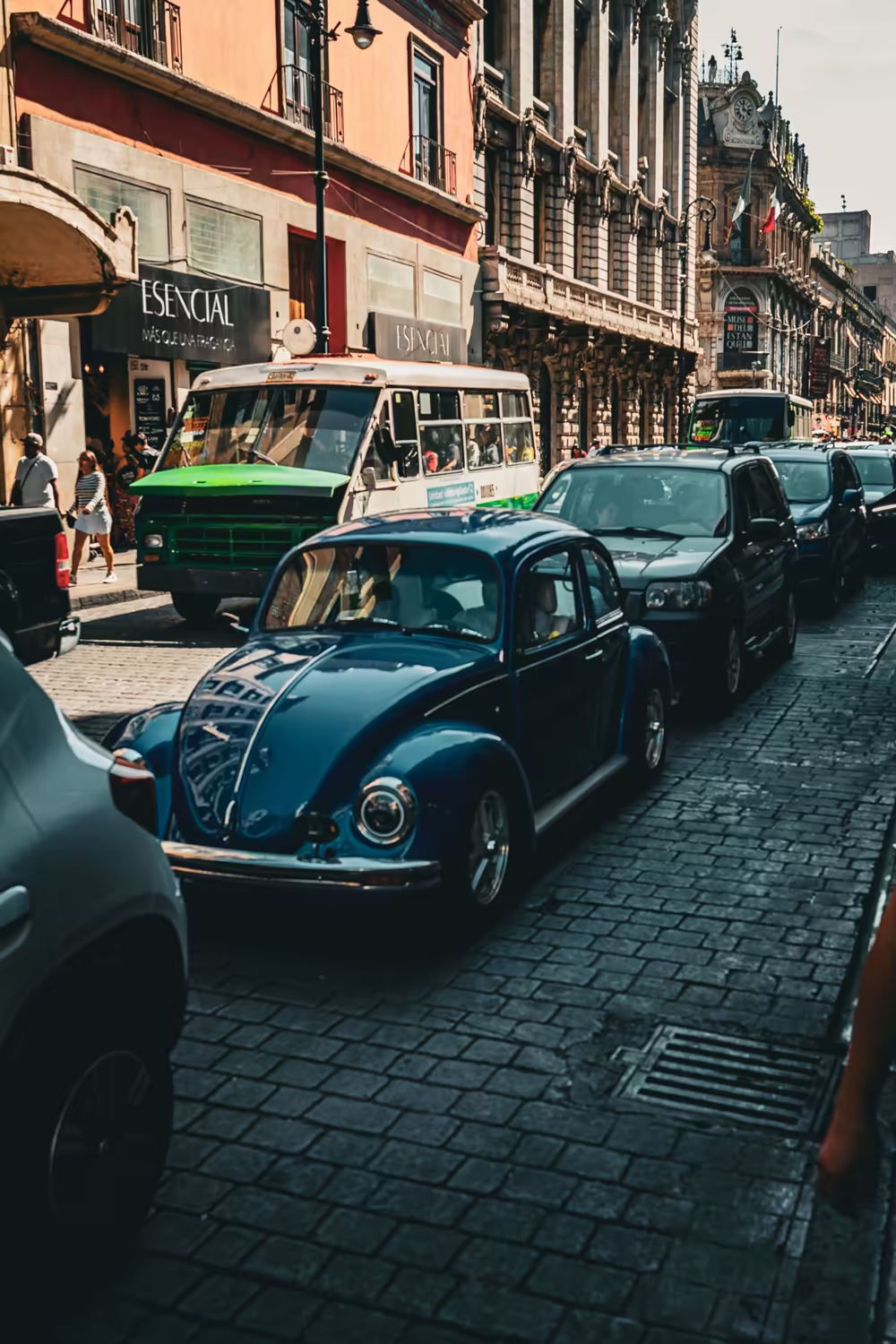
Mexico City's traffic is horrendous, and even short drives can crawl, so it's often quicker to walk. For longer trips, we used Uber and DiDi almost everywhere. Both are cheap by European standards, and DiDi is a great, cheaper alternative to Uber. If you're staying a few weeks, it's worth trying the free trial of Uber One for discounts on rides and food delivery, but remember to cancel before it ends.
Public transport is extensive and very cheap. A Metro ride costs MXN 5 wherever you go and a Metrobús trip MXN 6. Buy a rechargeable MI card for MXN 15 and load it with credit to tap through the barriers. We'd heard enough horror stories about the Metro that we stuck to travelling above ground, but plenty of people use it every day without trouble. If you do, avoid rush hour and keep your phone out of sight. The first two carriages on each train are reserved for women and children under 12.
Ecobici, the public bike-share, has 687 stations, mostly in central boroughs such as Cuauhtémoc and Benito Juárez. A seven-day pass costs MXN 441, with unlimited rides of up to 45 minutes, and an annual pass is MXN 588.
Don't hail taxis on the street. The US government advises against it, and the UK government warns that unlicensed drivers have robbed passengers in Mexico City. Use a ride-hailing app or a sitio taxi from an official rank instead.
Cost of living
About MXN 20,000 a month before rent
That's our estimate for one person living comfortably, eating out often and paying for a coworking membership and a gym. Skip the coworking and you'll get by on closer to MXN 16,000. Street food and public transport are incredibly cheap, but in our experience Mexico City is one of the most expensive cities in Latin America once you start paying for flats and restaurants in the popular neighbourhoods.
| Item | Typical price |
|---|---|
| Latte or cappuccino in a café | MXN 50–70 |
| Taco al pastor at a street stand | MXN 20–25 |
| Meal at an inexpensive restaurant | MXN 200 |
| Three-course dinner for two, mid-range | MXN 900 |
| Local draught beer (pint) | MXN 60 |
| Metro single | MXN 5 |
| Metrobús single | MXN 6 |
| Metrobús from the airport | MXN 30 |
| MI travel card | MXN 15 |
| Ecobici bike share, seven days | MXN 441 |
| Coworking day pass (WeWork) | from MXN 732 |
| Coworking membership, monthly (WeWork All Access Basic) | from MXN 4,069 |
| Gym, monthly (Smart Fit) | MXN 559–699 |
| Telcel prepaid SIM, 3.5GB for 30 days | MXN 200 |
| Trajinera boat in Xochimilco, per hour | MXN 750 |
| One-bedroom flat in the centre, monthly | MXN 21,650 |
| One-bedroom flat outside the centre, monthly | MXN 14,500 |
Sources: our visit in November 2024, Numbeo (meals, beer, coffee and rent, November 2026), Roadbook (café prices), Xataka and Publimetro (tacos), the city tourism office and TV Azteca (transport fares), Ecobici, WeWork, Smart Fit, Telcel and Selectra (SIM), and the Xochimilco borough government via Chilango, checked November 2026. Confidence: medium.
Mexico uses the peso, and you'll want cash for street food and markets. Tipping is customary, and many people leave 10 to 15% in restaurants, though Profeco, the consumer protection agency, is clear that tips are voluntary and can't be added to your bill without your say. We found American-style tipping culture everywhere, which adds up.
Finding somewhere to live is where the money goes. For a first month, an Airbnb or similar holiday let is the easiest option. Since April 2024, hosts and platforms have had to register with the city, and lawmakers have debated limiting how many nights a year a flat can be let, so check that any listing looks legitimate. For longer stays, local listings sites such as Inmuebles24 and Propiedades.com are worth a look, especially if you speak some Spanish.
Rents in the most popular areas are high. Numbeo puts the average one-bedroom in the centre at around MXN 21,650 a month, and Propiedades.com's November 2026 figures show average asking rents across all flat sizes of about MXN 24,600 in Roma Norte and MXN 29,600 in Condesa, against about MXN 15,700 in Mixcoac. Since 2024, a change to the civil code has meant rent rises can't exceed inflation, and in November 2026 the city's congress was still debating a broader tenancy law.
One tip from our stay: prices for accommodation double or even triple in the run-up to Día de Muertos at the start of November. If you're on a budget, arrive in the second week of the month, when the crowds have gone and prices drop back.
When to visit
November is our pick
Thanks to its altitude, Mexico City has a mild, spring-like climate all year, with daytime highs between about 22°C and 28°C. The year divides into a dry season from November to April and a rainy season from June to September, when heavy showers are frequent and July and August each bring more than 170mm of rain. Nights are cool all year, and from December to February they drop to around 9°C or 10°C, so pack a jumper.
We'd recommend November. The rains have finished and the city is at its most festive. Día de Muertos, the Day of the Dead, takes over the start of the month, with a huge parade through the centre, which in 2026 ran on 31 October. It's a wonderful time to be here, though we'd say Oaxaca does Día de Muertos even better, and accommodation prices soar around it, so budget travellers should aim for the second week of November.
December to February is dry and cool, with crisp mornings and plenty of sunshine, and it's a great time to visit if you don't mind cold nights. March to May is the warmest time of year, with April the hottest month, but spring is also the worst time for air pollution. The regional environmental commission forecast between five and 11 air quality alerts for the 2026 ozone season, which ran from February to June, and extra driving restrictions can kick in when the air is bad.
The rainy season isn't a write-off, and the city is at its greenest, but you'll want an umbrella to hand and extra patience in the traffic.
| Month | High | Low | Rain | Notes |
|---|---|---|---|---|
| January | 22°C | 9°C | 12mm | Sunny days, cold nights |
| February | 24°C | 10°C | 6mm | Dry and warming up |
| March | 26°C | 11°C | 12mm | Warm and dry |
| April | 28°C | 13°C | 24mm | The hottest month |
| May | 27°C | 14°C | 59mm | Warm, with the first storms |
| June | 26°C | 14°C | 133mm | Rainy season begins |
| July | 25°C | 13°C | 174mm | Wet and green |
| August | 25°C | 13°C | 176mm | The wettest month |
| September | 24°C | 13°C | 158mm | Still wet |
| October | 24°C | 12°C | 71mm | The rains ease off |
| November | 23°C | 10°C | 17mm | Our pick, with Día de Muertos |
| December | 22°C | 9°C | 5mm | Dry and festive |
Source: Servicio Meteorológico Nacional climate normals for the Tacubaya station (1991 to 2020).
How long to stay
At least a month. If you're working a normal 30 to 40-hour week, that's about how long it takes to see the best of the city, and two weeks left us wanting much more. Most Western visitors can stay for up to 180 days, so time is rarely the problem.
Working remotely and visas
No dedicated nomad visa
- Tourist stay
- Up to 180 days, at the border officer's discretion
- Residency route
- Temporary resident visa, up to 4 years
- Income
- 680 days of UMA a month, about MXN 79,800 in 2026, or about MXN 1.34 million in savings
- Tax residency
- Based on where your home is, not a day count
- Time zone
- CST (UTC−6) all year
British, EU and US citizens don't need a visa to visit Mexico and can stay for up to 180 days. That's the maximum, though, not a guarantee. The immigration officer decides how long to give you, and the number of days is recorded on your digital entry form, the FMMD, or stamped in your passport, so check it before you leave the desk. Some major airports now have e-gates for adult visitors, and you can download proof of your entry from the immigration institute's website within 60 days of arriving. Be ready to show a return or onward ticket and proof of where you're staying, and you may be asked to show you have enough money for your stay. The UK government says your passport must be valid for your whole stay, while Mexico's embassy in London recommends at least six months' validity, so it's safest to have that.
Can you work remotely on a tourist stay?
Visa-free visitors enter Mexico as non-lucrative visitors, which means you can't work for Mexican companies or be paid by anyone in Mexico. There's no specific rule about answering emails for a foreign employer from a café in Roma, and in our experience Mexico is very relaxed about remote workers, but it remains a grey area rather than a right. If you want to stay longer and do it properly, the temporary resident visa is the route. Our guide to working remotely on a tourist visa explains the risks.
The temporary resident visa
Mexico doesn't have a visa with "digital nomad" in the name, but its temporary resident visa, the visa de residente temporal, works as one. It's granted on proof of economic solvency rather than a job offer, so it suits remote workers and freelancers paid from abroad. Since new guidelines in July 2025, the thresholds are set in UMA, a daily reference unit that was worth MXN 117.31 from February 2026. You need either a monthly income, after tax, of at least 680 days of UMA, about MXN 79,800, for each of the last six months, or an average monthly balance of 11,460 days of UMA, about MXN 1.34 million, over the last 12 months.
Consulates apply the rules with some discretion, and not all of them had updated their published figures by late 2026, so check the requirements of the consulate you plan to use. You apply in person at a Mexican consulate before you travel, and you'll get a single-entry visa valid for 180 days. Within 30 days of arriving, you exchange it at the immigration institute (INM) for a residence card, which is valid for a year at first, and temporary residency can last up to four years in total. Our Mexico digital nomad visa guide covers the full process.
Tax is where Mexico differs from many countries. Its rules don't use a 183-day count. Instead, you become a Mexican tax resident if you set up a home in Mexico, and if you also have a home elsewhere, it comes down to where your centre of vital interests is, for example whether more than half your income comes from Mexico or your main professional activity is here. If you're staying long-term in a place of your own, take professional advice.
Working hours
Mexico scrapped daylight saving in 2022, so Mexico City stays on Central Standard Time (UTC−6) all year. That's six hours behind the UK in winter and seven during British Summer Time, so working for a UK or European team means very early starts. It's ideal for North America. New York is one hour ahead in winter and two in summer, while California is two hours behind in winter and one in summer, so your working day lines up almost perfectly. Use our time zone overlap calculator to find the hours that work.
Lunch, la comida, is the main meal of the day and is eaten later than in the UK or US, so restaurants are busiest in the middle of the afternoon.
If your employer needs to approve the trip first, you can create a free remote work request and send it to them for sign-off.
Safety
Safer than its reputation, with the usual big-city caveats
In our view, much of Mexico City's reputation is undeserved. Mexico isn't Switzerland, and some parts of the country are genuinely dangerous, but CDMX felt no different to any other major capital, and we'd argue you're more likely to have your phone swiped in London. Benito Juárez, where we stayed, is one of the city's safest boroughs, with good infrastructure and family-oriented colonias, and affluent areas such as Roma Norte, Roma Sur, Condesa and Polanco have a strong police presence and plenty of private security.
The Centro Histórico is fine during the day, when there are police everywhere, but it can feel questionable at night, and we wouldn't wander there late. In general, the further off the beaten track you go, the less safe it becomes. Use your street smarts and don't be flashy.
The official advice is a little more cautious. The UK government warns that crime is a risk to foreigners in Mexico's big cities, including short "express" kidnappings, and that unlicensed taxi drivers have robbed passengers in Mexico City. The US State Department rates Mexico City at Level 2, exercise increased caution.
Practical advice
- Don't hail taxis on the street. Use a ride-hailing app or a sitio taxi from an official rank.
- Keep your phone out of sight on busy streets and on public transport, where pickpocketing is common.
- Avoid the Centro Histórico late at night.
- If you use the Metro, avoid rush hour. Women and children can use the reserved carriages at the front of the train.
- Download the 911 CDMX app for earthquake alerts, and learn what to do if the alarm sounds.
- Save 911 for all emergencies, including ambulances.
Mexico City sits in an earthquake zone, and the city takes it seriously. More than 28,000 loudspeakers across the city sound an alarm when a strong quake is detected, and alerts also go to mobile phones. The 911 CDMX app can give up to 60 seconds' warning before the shaking starts, though it can't warn you about every quake. If you hear the alarm, follow what the people around you do, as locals know the drill.
Officially, the city's tap water is drinkable, but the UK and US governments both advise sticking to bottled or boiled water, and most people drink bottled or filtered water.
Finally, the altitude takes a few days to get used to. At 2,240m, you may find yourself short of breath on stairs or tired after a big night, so take it easy at first and drink plenty of water.
Healthcare
Mexico City has a large network of well-equipped private hospitals. The big names include Centro Médico ABC, with hospitals in Observatorio and Santa Fe, and Médica Sur in Tlalpan, while the Hospital Ángeles group runs several hospitals across the city, including one in Pedregal. Treatment is good but not cheap, and private hospitals usually want payment or proof of insurance before they treat you, so travel insurance with medical cover is essential.
For minor problems, the doctor's surgeries attached to pharmacies are a Mexican institution. Farmacias Similares, the chain with the Dr Simi mascot, has thousands of small consultorios next to its shops across the country, where a consultation costs a symbolic fee of around MXN 50. In an emergency, call 911 and ask for an ambulance.
Live & work
Where to stay
Mexico City is far too big to know in one visit, so pick your base carefully, as getting across town can take the best part of an hour in traffic. Most nomads and expats end up in Roma or Condesa, in the central borough of Cuauhtémoc, and for good reason, as they're leafy and safe. We'd suggest a different approach: spend your first days exploring the centre and the fashionable colonias, then settle somewhere more residential, such as Mixcoac, for better value and a more local feel.
Mixcoac
Where we stayed
Mixcoac is a quiet, residential colonia in the borough of Benito Juárez, south-west of the centre, and it's where we spent most of our time. It's one of the safest parts of the city and has everything you need for daily life, with plenty of bars and restaurants. The catch is the distance. If you want to be where the action is, it's a 30 to 45-minute drive back to the centre, though Mixcoac Metro station, on Lines 7 and 12, gives you a way around the traffic.
Pros
- Safe and residential
- Much better value than Roma and Condesa
- A genuinely local feel
- Plenty of bars and restaurants
Cons
- A long ride from the centre in traffic
- Few sights on your doorstep
Rent guide: average asking rents of about MXN 15,700 a month, rising to about MXN 20,200 in neighbouring Insurgentes Mixcoac
Work from: WeWork Insurgentes or Inhouse Insurgentes, both in Benito Juárez
Roma Norte and Roma Sur
Nomad central
Roma is popular with creatives and young locals, and it's where many travellers land first. Roma Norte is the livelier and more commercial of the two, while Roma Sur is quieter and more residential. It's the easiest place in the city to settle into, with coworking spaces and other nomads on every block. We didn't warm to it ourselves, as it felt showy and over-gentrified, and it's at the heart of the city's debate about gentrification.
Pros
- A lively restaurant and bar scene
- Full of coworking spaces
- Easy to meet other nomads
- Very walkable and well covered by Ecobici
Cons
- Expensive and over-gentrified
- Cafés overrun with laptops
Rent guide: average asking rents of about MXN 24,600 a month in Roma Norte
Work from: one of the area's many coworking spaces, including Público
Condesa
Parks and cafés
Condesa is an upscale colonia of European-style streets and sprawling parks, with a vibrant café culture. Its crown jewel is Parque México, which is great for a run or a walk, and where we even met a man out walking his pet pig. The park is ringed by Avenida Ámsterdam, an oval of Art Deco buildings that follows the line of an old racetrack. It's beautiful, but it's also the most expensive part of this list and, like Roma, it was a focus of the protests against gentrification in 2025.
Pros
- Gorgeous parks and Art Deco streets
- Great for running
- Excellent cafés and restaurants
- Safe, with a strong police presence
Cons
- The most expensive area on this list
- Can feel like an expat bubble
Rent guide: average asking rents of about MXN 29,600 a month
Work from: Público or one of the many smaller coworking spaces nearby
Centro Histórico
Sightseeing base
The Centro Histórico was the heart of the Aztec capital, then of colonial New Spain, and it's the oldest part of the city, as well as a UNESCO World Heritage Site. It's where most of the city's hostels are, and where we spent our first hectic week, within walking distance of the Zócalo and the Palacio de Bellas Artes. It's a great place to start, but once you've had your fill of the sights, we'd strongly suggest moving on.
Pros
- The big sights on your doorstep
- Plenty of cheap hostels and hotels
- Good transport links
- A heavy police presence by day
Cons
- Can feel questionable at night
- Hectic and noisy
Rent guide: average asking rents of about MXN 14,700 a month
Work from: a coworking space in a quieter neighbourhood
Coyoacán
Bohemian south
Coyoacán, in the south of the city, is its unofficial bohemian capital, packed with museums and green spaces, and its markets and street vendors seem to go on forever. It's home to the Frida Kahlo Museum and the Viveros de Coyoacán, one of the city's favourite places for a run, and it's worth at least a day or two of exploring even if you don't stay. Living here means a slower pace, but it's a long way from the nomad hubs.
Pros
- A bohemian atmosphere
- Museums and markets on your doorstep
- More affordable than Roma and Condesa
- Viveros de Coyoacán for running
Cons
- A long trip to the centre
- Further from the nomad scene
Rent guide: two-bedroom flats average about MXN 17,300 a month across the borough
Narvarte and Del Valle
Local and good value
If you like the idea of Benito Juárez but want to be closer to the centre, Narvarte and Del Valle are well worth a look. Both are residential neighbourhoods in Benito Juárez, between Roma and Mixcoac, with rents well below those in Roma and Condesa. They're also handy for some of the coworking spaces we found, including Spacioss in Narvarte and Inhouse in neighbouring Insurgentes San Borja.
Pros
- Good value for the location
- Close to Roma without the crowds
Cons
- Not much nightlife
- Few sights
Rent guide: average asking rents of about MXN 17,200 a month in Narvarte Oriente and MXN 19,600 in Del Valle
Work from: Spacioss or Inhouse Insurgentes
Rent guides are Propiedades.com average asking rents for flats of all sizes, updated between September and November 2026, with the Coyoacán figure from Inmuebles24 data reported by Mexico News Daily in August 2026. A furnished one-bedroom let for a few months, or an Airbnb, usually costs more.
Where to work
Mexico City has a huge coworking scene, and that's where we'd point you. WeWork alone has 13 locations in the city, and one directory lists more than 200 coworking spaces in total. Cafés are a different story. In Roma and Condesa, many have become informal offices, and we'd encourage you to keep your laptop for the coworking space.
Coworking
WeWork Insurgentes
Insurgentes Sur, Benito Juárez · Day passes from about MXN 730 and All Access memberships from about MXN 4,070 a month
WeWork's space on Avenida Insurgentes Sur is the obvious choice if you're staying in Benito Juárez and want the usual WeWork set-up. An All Access membership also gets you into the other 12 WeWork spaces across the city, which is handy if you move between neighbourhoods.
Spacioss
Narvarte · Prices on request
A small, local coworking space in Narvarte, and the cheapest of the day passes we found when we visited. It doesn't publish prices, so get in touch before you go.
Inhouse Insurgentes
Insurgentes San Borja, Benito Juárez · Dog friendly · Prices on request
A coworking and private office space in Insurgentes San Borja, next to Del Valle, and it's dog friendly, so you can bring your four-legged colleague along.
Público
Roma, Condesa, Juárez, Polanco and other central colonias · Memberships from about MXN 3,800 a month in 2025
A local chain with spaces across the most popular colonias, so there's likely to be one close by if you're staying in Roma or Condesa.
Cafés
Mexico City has a thriving coffee scene, with specialty cafés all over Roma and Condesa, where a latte or cappuccino costs around MXN 50 to 70.
Working from them is another matter. On one visit to a café in this part of town, we counted four of the six tables taken by people on laptops, one of them on a full-blown conference call.
Internet and SIM cards
Speedtest's May 2026 index put Mexico's median fixed broadband download speed at about 117Mbps. Telmex is the biggest provider and Totalplay the fastest, and fibre is widely available in the city. Our download speeds averaged 82Mbps during our stay, which was plenty for video calls, but ask your host for a speed test screenshot before you book anyway.
For mobile data, skip the travel eSIMs, which we found expensive for Mexico, and buy a physical Telcel SIM from one of its shops. Telcel's Amigo Sin Límite prepaid packages start at MXN 100, and MXN 200 gets you 3.5GB of data for 30 days plus unlimited calls and social media. Mexico now requires every mobile line to be registered to an ID within 30 days of activation, and the rules for foreigners have been patchy, so ask the shop to register your new SIM with your passport when you buy it.
Food & drink
We're in Mexico City, so what do you expect? Mexican food is on another level. For fine dining, there's only one city in the world we'd put ahead of it, and that's Lima, but the real joy of eating here is on the street.
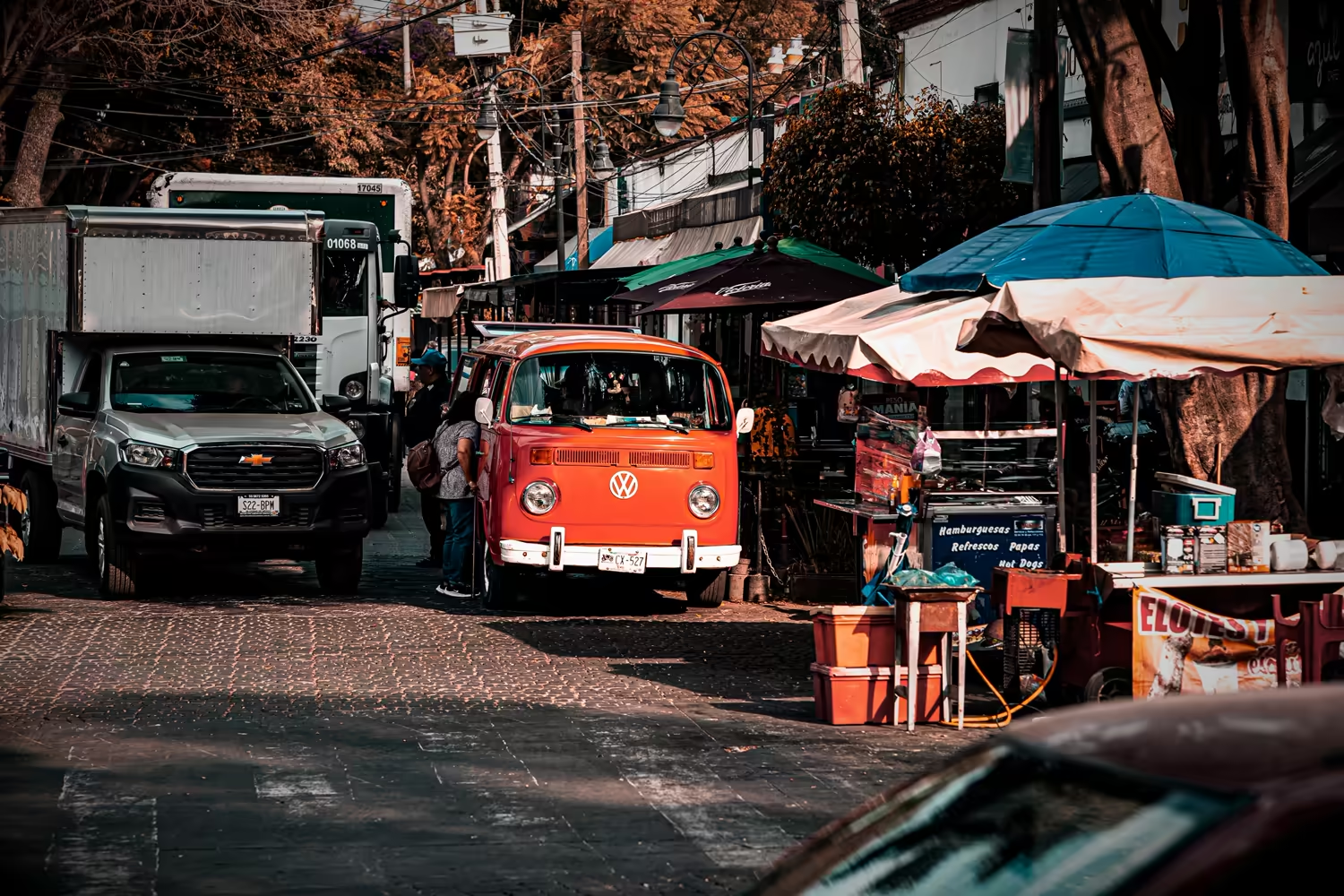
We didn't bother much with the famous restaurants. We didn't travel halfway across the world to spend a fortune on a meal surrounded by people photographing their plates. Instead, find a busy street stall, pull up a plastic chair and eat what the locals are eating. There's no single best spot, as everyone has their own favourite, and that's half the fun.
What to eat
- Tacos al pastor: No trip to Mexico City is complete without them. Thin slices of marinated pork are carved from a vertical spit and served on small tortillas with pineapple and coriander. Expect to pay around MXN 20 to 25 a taco at a good street stand.
- Chilaquiles: Fried tortilla chips smothered in salsa and cheese, and a breakfast favourite.
- Tlayudas: A large, crispy tortilla piled with toppings, often described as Mexican pizza.
- Tortas: Mexico's answer to the baguette, a big, crusty roll stuffed with your choice of fillings.
- Gorditas: The name means "little fatty", and it's a round, fried bread split open like a pitta and stuffed with whatever you fancy.
- And plenty more: tlacoyos, tamales, pozole, mole, elote, enchiladas, cemitas and quesadillas, to start with.
What to drink
- Agua fresca: "Fresh water", sold by street vendors in all sorts of flavours, especially hibiscus, known as jamaica.
- Horchata: In Mexico it's made from rice and has a thin, watery consistency, sometimes with condensed milk added.
- Café de olla: Traditional Mexican coffee brewed with cinnamon and piloncillo, sometimes spiced with cloves or star anise.
- Mezcal and tequila: Mexico's famous agave spirits, alongside a long list of excellent local beers.
Take a taco tour
Our pick
If you're a taco fan, book a street food tour early in your stay. We did ours through Airbnb Experiences and it was a riot, and it's a great way to learn what to order.
Off the clock
Things to see and do
Where do you even begin? You could spend a year in Mexico City and not see everything, and if you're working a normal week, you'll need at least a month of evenings and weekends to cover the highlights. Visit the big museums on weekdays if you can, as several of them are free for residents on Sundays.
Museo Nacional de Antropología
Our favourite
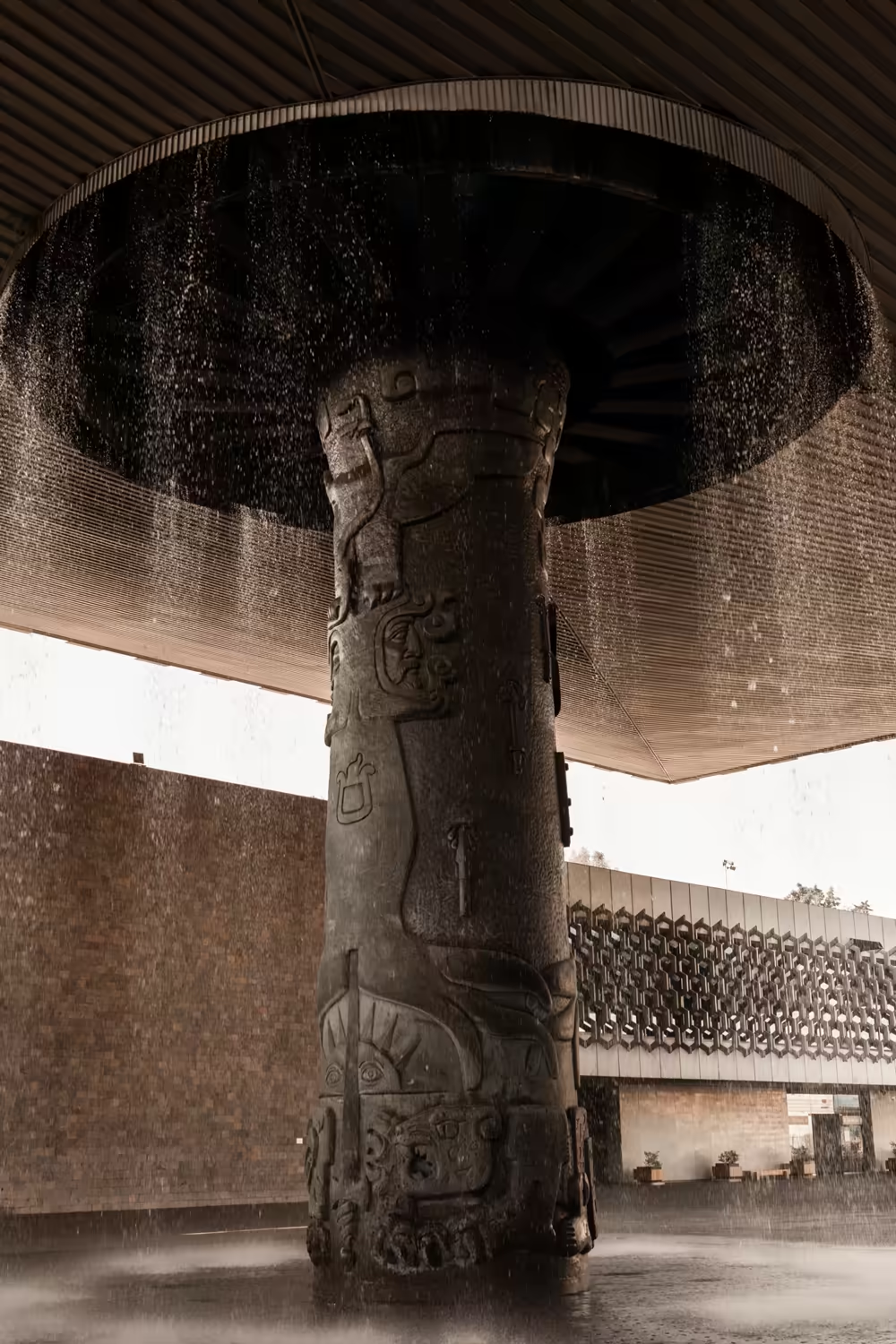
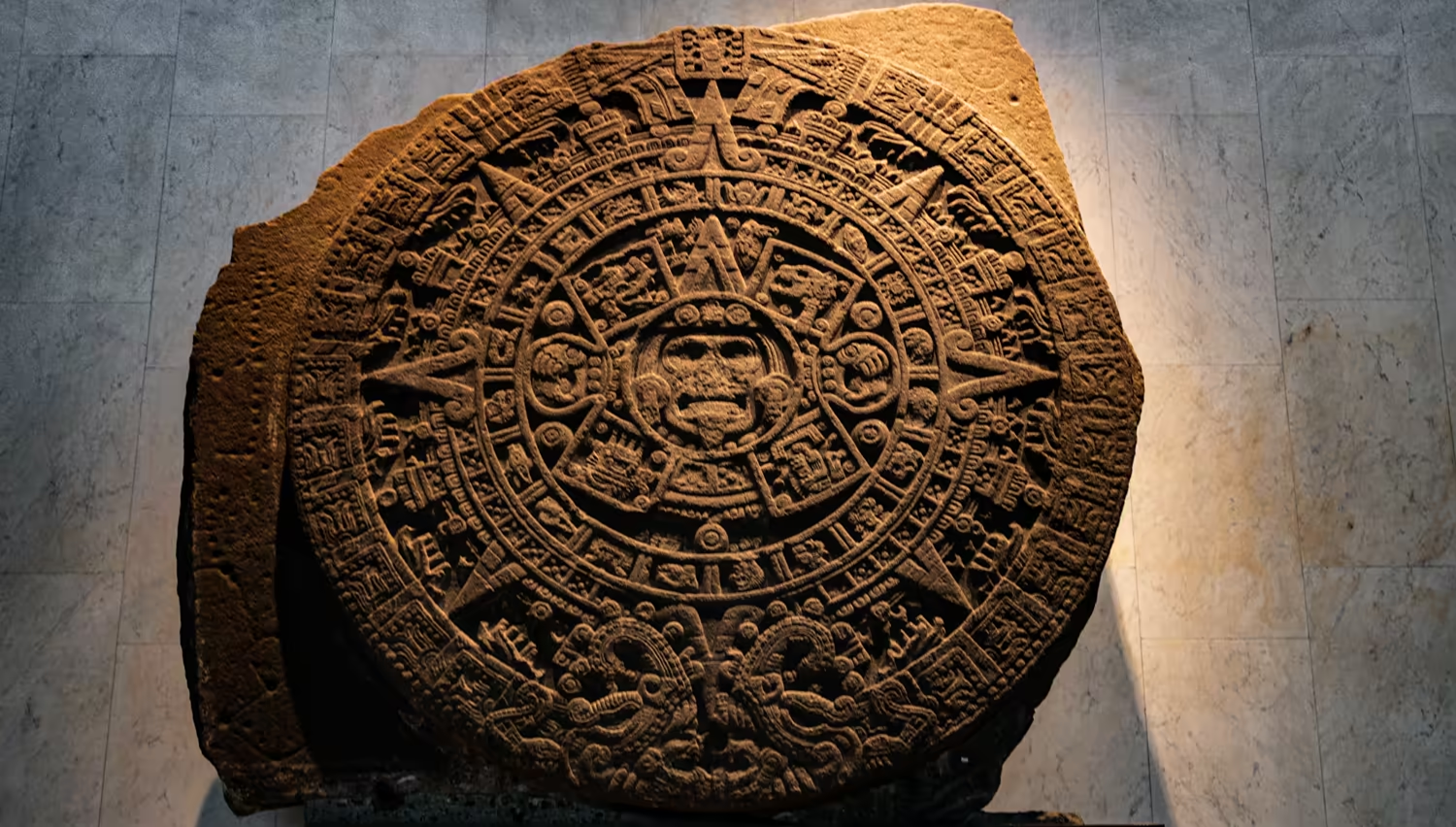
Easily one of the most impressive museums we've ever visited. The giant stone umbrella in the central courtyard, a carved column more than 10 metres tall with water pouring from its canopy, is worth the trip alone. Inside, you'll find the Piedra del Sol, the famous Aztec sun stone, among thousands of artefacts from Mexico's ancient cultures. Give it the best part of a day and wear comfortable shoes.
Tuesday to Sunday, 9am to 6pm · MXN 210
Xochimilco
Don't miss
An absolute must-see. In the far south of the city, Xochimilco's canals are part of the same UNESCO World Heritage Site as the Centro Histórico, and a trip on a trajinera, one of its brightly painted flat-bottomed boats, gives you a glimpse of the lake city the Aztecs built. Grab a spicy margarita and settle in. The rate is per boat, not per person, so it's best with a group, or you can book a tour that includes the boat.
Official trajinera rate about MXN 750 an hour per boat
Palacio de Bellas Artes
A monumental palace designed by an Italian architect and packed with Mexican murals. Entry is cheap, and it's an easy way to spend a few hours in the centre.
Tuesday to Sunday, 10am to 6pm · MXN 90, free on Sundays
Coyoacán
The unofficial bohemian capital of the city, packed with museums and green spaces, with markets and street vendors on every corner. Spend a day or two wandering its plazas and eating your way around the market, and combine it with the Frida Kahlo Museum.
Free to wander
Museo Frida Kahlo (Casa Azul)
The blue house in Coyoacán where Frida Kahlo lived, now a museum to one of modern history's most celebrated artists. We didn't make it ourselves, but it comes highly recommended. There's no box office, so buy your tickets online, ideally well ahead.
Closed Mondays · MXN 320, tickets online only
Parque México
One of the city's hundreds of parks, and our favourite. Officially Parque San Martín, it opened in 1927 on land that was once a racetrack, and its Art Deco clock tower and open-air theatre, the Foro Lindbergh, are lovely. There are daily dance classes and plenty of space to walk or run.
Free · Open all day
Teotihuacán
The vast ancient city of Teotihuacán, with its Pyramids of the Sun and Moon, is the classic day trip from the capital. Go early, before the heat and the crowds build, and take sun cream and water. Security at the site was stepped up after a shooting there in April 2026, so check the latest rules on bags before you go.
About 45km north-east of the city · MXN 210 · 8am to 5pm
Día de Muertos
Mexico's Day of the Dead is the best reason to visit in autumn, when a huge parade makes its way from Paseo de la Reforma to the Zócalo. It's spectacular, though accommodation prices double or triple, and in our view Oaxaca celebrates it even better.
Parade on 31 October in 2026
For more ideas, James's Mexico City Google Map pins all his favourite spots.
Keeping fit
Mexico City is home to dozens of public parks, all great for running, but remember you're more than 2,200m above sea level. Give yourself a few days to adjust and don't expect any personal bests, at least not at first.
Circuito Ámsterdam
Run · Walk
A 2km loop around Parque México along the leafy central walkway of Avenida Ámsterdam, which is lit at night. You'll have to pause at a few road crossings, but it's a lovely run.
Viveros de Coyoacán
Run · Walk
A huge tree nursery in Coyoacán that doubles as a park, with a 2km running track of red earth. It's a few steps from Viveros Metro station and a favourite with local runners.
El Sope, Bosque de Chapultepec
Run
A dedicated running track in the second section of Chapultepec, the city's huge central park, with two circuits of 850m and 1,200m on a fine gravel surface, and it opens early.
Paseo de la Reforma on a Sunday
Cycle · Run
Every Sunday from about 8am to 2pm, the city's Muévete en Bici programme closes 55 to 60km of roads to cars, including Paseo de la Reforma. Join the crowds on bikes and skates, and borrow an Ecobici if you don't have your own.
Muévete en Bici and the Ciclotón
The Sunday car-free ride is one of the best things about living in Mexico City, and we loved seeing so many people out on the streets. On the last Sunday of each month, it's replaced by the Ciclotón, a longer ride on a route that changes each time. In 2026, editions ranged from 33km to more than 60km.
Gyms
Budget chain Smart Fit has branches all over the city, with memberships from about MXN 559 a month on a 12-month plan or MXN 659 with no commitment.
People and community
Mexico City has a big nomad and expat community, concentrated in Roma and Condesa, and you won't struggle to meet people. The long-running Meetup group Mexico Remote Workers and Digital Nomads has thousands of members and has run weekly coworking days in Roma Norte and drinks in Condesa, and there are regular free language exchanges in Roma Norte too.
Coworking spaces are another easy way in, especially the bigger ones with community events. If you'd rather meet locals, stay outside the nomad bubble, as we did in Mixcoac, and join a class or a running group.
Spanish will make a huge difference here. You can get by in English in Roma and Condesa, but elsewhere you'll want at least the basics. We were brushing up on our Spanish during our stay, and living somewhere like Mixcoac, where English is far less common, gave us plenty of practice.
Tips
Positives
The food is incredible.
Street tacos for around MXN 20 to 25, and a cuisine that's on another level.
There's an enormous amount to do.
From world-class museums to the canals of Xochimilco, there's enough to fill every weekend.
The streets are yours on Sundays.
Muévete en Bici closes 55 to 60km of roads to cars every Sunday morning.
History is everywhere.
The city has three UNESCO World Heritage Sites, from the Centro Histórico to the UNAM university campus.
It's perfect for North American hours.
Central Time all year means easy overlap with the US and Canada.
There's something for everyone.
Whatever you're into, there's a colonia in CDMX that does it.
Negatives
The traffic is horrendous.
It's often quicker to walk, and crossing the city can take the best part of an hour.
Parts of the city feel over-gentrified.
Roma and Condesa can feel like an expat bubble, and locals have protested about rising rents.
Tipping culture has crept up.
American-style tipping is everywhere, which adds to every bill.
It's one of Latin America's most expensive cities.
Rents in the popular colonias are high, and prices soar around Día de Muertos.
Air quality dips in the dry season.
Pollution alerts are most likely between February and June.
Tips
Buy a Telcel SIM.
Travel eSIMs for Mexico are expensive, and a local SIM is cheap, but register it with your passport.
Try Uber One's free trial.
You'll save on rides and food delivery, but cancel before the trial ends.
Download DiDi too.
It's a cheaper alternative to Uber, though you may need to switch your app store region to Mexico to get it.
Explore first, then settle somewhere calmer.
See the sights from the centre, then move to a residential colonia like Mixcoac.
Dodge the Día de Muertos price spike.
Arrive in the second week of November, when prices drop and availability is high.
Take it easy for the first few days.
At 2,240m, the altitude can leave you breathless at first.
Never hail a taxi on the street.
Use an app or an official sitio taxi.
Book the Frida Kahlo Museum online.
There's no box office, so you can't just turn up.
Know your airport pick-up point.
Uber and DiDi can't collect you inside the airport, so head for the official points outside.
Mexico City · Overall 7.4/10
Work setup 8 · Walkability 7 · Value 6 · Safety 7 · Lifestyle 9 · Stayed two weeks, November 2024
Working from Mexico City?
Nomad Register counts your days in Mexico against the 180-day visitor limit and turns your trip into a request your employer can approve in a click, across 200+ destinations.
Log your Mexico trip · For employers
Need sign-off first? Create a free remote work request.
Frequently asked questions
Is Mexico City good for digital nomads?
Yes. It has a huge coworking scene and fast fibre, and its time zone suits North American teams. The food alone is worth the trip. The main drawbacks are the traffic and high rents in the most popular neighbourhoods.
Where should digital nomads stay in Mexico City?
Roma Norte and Condesa are the most popular bases, with the most cafés and coworking spaces. For better value and a more local feel, try Mixcoac, Narvarte or Del Valle in Benito Juárez, which is one of the safest boroughs in the city.
How long can I stay in Mexico as a tourist?
British, EU and US citizens can visit Mexico visa-free for up to 180 days. The immigration officer decides how many days you get, so check the number recorded on your entry and carry proof of onward travel and accommodation.
Does Mexico have a digital nomad visa?
Not by name, but the temporary resident visa works as one. You need a monthly income of about MXN 79,800 over the last six months, or average savings of about MXN 1.34 million over the last year, and it can last up to four years. Our Mexico digital nomad visa guide covers the requirements.
How much does it cost to live in Mexico City as a digital nomad?
Budget around MXN 20,000 a month before rent if you eat out often and use a coworking space. A one-bedroom flat averages about MXN 21,650 a month in the centre and MXN 14,500 further out, with Airbnb lets costing more.
Is Mexico City safe?
For most visitors, yes, if you take the same care you would in any big city. Petty theft is the main risk, so use ride-hailing apps rather than street taxis and avoid the Centro Histórico late at night. Benito Juárez, Condesa, Roma and Polanco are among the safest areas.
When is the best time to visit Mexico City?
November, when the rainy season has ended and Día de Muertos fills the city, though prices spike around it. The dry season from November to April is the most pleasant time to visit, while June to September brings heavy rain.
What time zone is Mexico City in?
Mexico City uses Central Standard Time (UTC−6) all year, as Mexico abolished daylight saving in 2022. It's six hours behind the UK in winter and seven in summer, and one or two hours behind New York.
Can you drink the tap water in Mexico City?
The city says its tap water is drinkable, but the UK and US governments both advise drinking bottled or boiled water, and most people drink bottled or filtered water.
How fast is the internet in Mexico City?
Fibre is widely available, and Mexico's median fixed broadband download speed was about 117Mbps in May 2026. For mobile data, a prepaid Telcel SIM is cheap.
Is there Uber in Mexico City?
Yes. Uber and DiDi both operate across the city and are cheap, and DiDi is often the cheaper of the two. Neither can pick you up inside the airport, so use the official pick-up points outside the terminals.
Will the altitude in Mexico City affect me?
Possibly. Mexico City sits at 2,240m, so you may feel short of breath or tire more easily for the first few days. Take it easy and don't plan a hard run on day one.
Where next
- Oaxaca: in our view the best place in Mexico for Día de Muertos
- Mérida: the Yucatán's laid-back colonial capital
- Panama City: a walkable old town and a free stopover on Copa flights
- Rio de Janeiro: beach life and a café scene made for working
- Mexico Digital Nomad Visa guide: requirements, income, tax and how to apply
- All city guides
About this guide
James is the founder of Nomad Register and has been a full-time digital nomad for around two years. He spent two weeks in Mexico City in November 2024, starting in the Centro Histórico before settling in Mixcoac, while learning Spanish and building a business. This guide is based on that visit, with facts and prices checked in November 2026. You can read his original trip report on The Nest.
This guide is for general information only and is not legal or tax advice. Visa rules and prices change, so confirm entry requirements with the Mexican authorities or your government's travel advice before you travel.