Panama · Visited August 2026 · 1 week
Panama City for Digital Nomads
A sweltering banking capital with one of the most likeable old towns in Latin America.
Best for short stays · Copa stopover hub
By James, founder of Nomad Register · Updated November 2026
Panama City at a glance
- Overall
- 6.6/10
- Work setup
- 8/10
- Walkability
- 4/10
- Value
- 6/10
- Safety
- 7/10
- Lifestyle
- 8/10
- Living costs
- About $1,000 a month before rent
- Tourist stay
- 90 days for most nationalities, 180 for US and Canadian citizens
- Nomad visa
- Available: 9 months, renewable once
- Time zone
- UTC−5 all year, no clock changes
- Currency
- US dollar (Panama's balboa is pegged 1:1)
- Internet
- Fibre is widespread, with 50Mbps+ typical
- Airports
- PTY (Tocumen, international) and PAC (Albrook, domestic)
- Population
- 2.1 million (metro)
- Plugs
- Types A and B, 120V
Climate: Hot and humid all year, driest from January to April (best month: February). Jan 24–29°C, 17 mm rain; Feb 24–30°C, 10 mm rain; Mar 24–31°C, 12 mm rain; Apr 25–30°C, 81 mm rain; May 25–29°C, 221 mm rain; Jun 24–29°C, 251 mm rain; Jul 24–29°C, 269 mm rain; Aug 24–29°C, 267 mm rain; Sep 24–29°C, 260 mm rain; Oct 24–28°C, 280 mm rain; Nov 24–28°C, 235 mm rain; Dec 24–29°C, 110 mm rain
Overview
The skyline gets the attention, but the old town does the work
Panama City is a canal city and a banking city long before it is a nomad city. It's hot all year and heavily Americanised, and it's built around glass towers and fast roads rather than people on foot, so most remote workers only ever see it from a transit lounge at Tocumen, the self-styled Hub of the Americas.
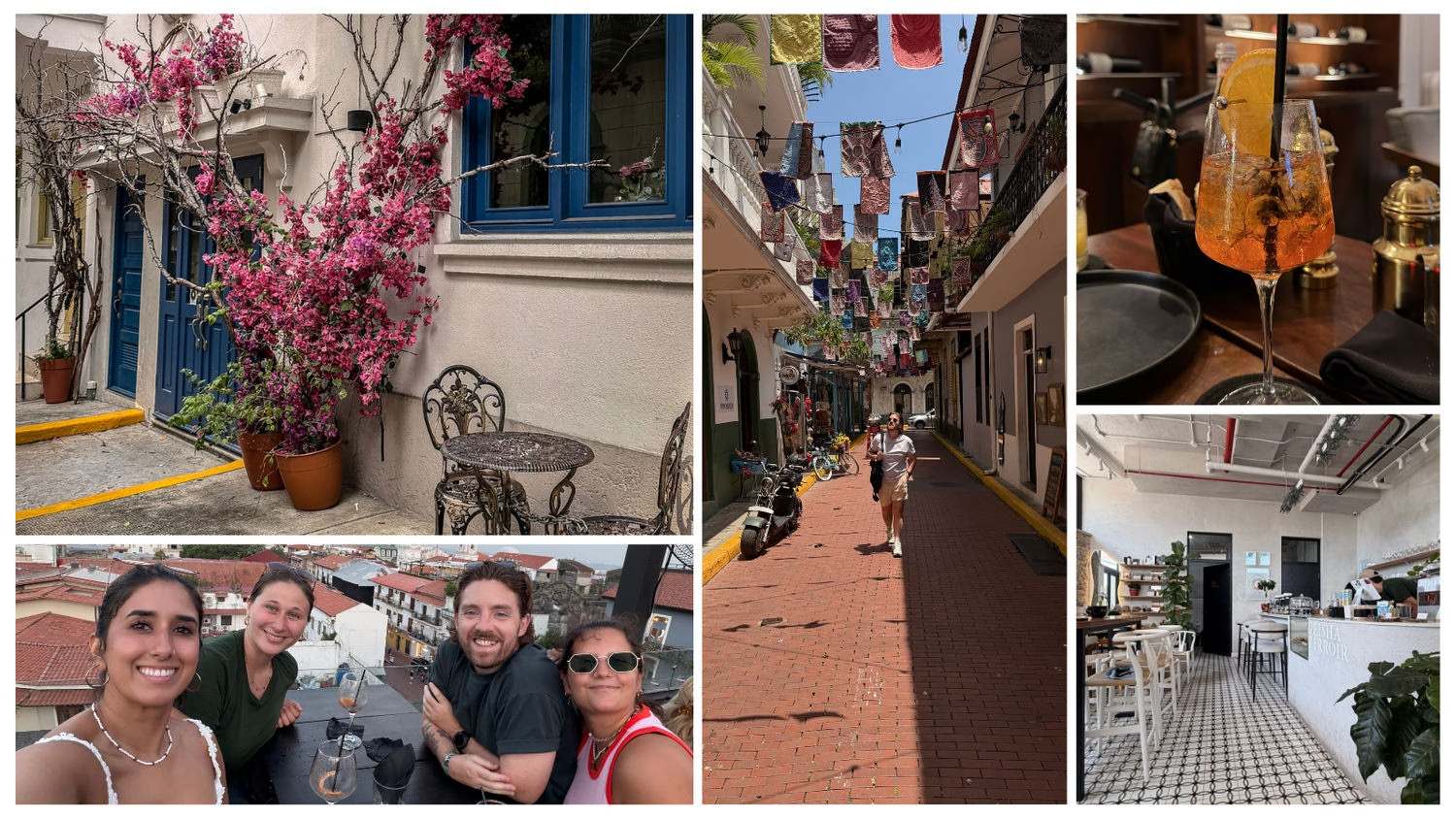
That first impression undersells it. Taken as a whole, the city fails two tests that matter to anyone working on the road, because the traffic is genuinely bad and getting around on foot is a struggle. Casco Viejo, the restored old town on a small peninsula at the western end of the bay, passes every one of them. It's compact enough that you can walk from your apartment to breakfast and a laptop-friendly café, then on to dinner and a rooftop bar, without getting into a car, and its café and restaurant scene would be impressive in a city twice the size.
For a stay of a week to a couple of months, base yourself in Casco Viejo and treat the rest of the city as somewhere you visit by Uber. For anything longer, El Cangrejo offers lower rents and a metro station on your doorstep. And thanks to Copa's free stopover, a week here costs nothing extra on top of a flight you were probably taking anyway.
Worth a stopover
"I went in with genuinely low expectations, and maybe that's exactly why I came away pleasantly surprised, even if I was sweating buckets most days."
James, founder of Nomad Register
Panama City suits you if
- you're flying Copa through Panama and can add a stopover at no extra cost
- you care about coffee, since Panama grows some of the most sought-after beans in the world
- you want a short stay where everything you need is within a few blocks
- you qualify for Panama's remote worker visa and want a longer base in the Americas
It's less suited to you if
- you struggle in the heat, because no month brings any relief
- you want a whole city you can explore on foot
- you're on a tight budget, as prices are in dollars and Casco charges a premium
- you're looking for a large, established nomad community
At a glance
Work setup · Great · 8/10
Casco Viejo has several excellent specialty cafés within a few blocks of each other, including one that is genuinely set up for laptops with plenty of space and power sockets, and fibre broadband is widespread across the city. Most decent apartments deliver 50Mbps or more, and the business district has coworking at every price point. It loses points because the old town has only one real coworking option, so anyone who needs a dedicated desk every day will end up commuting.
Walkability · Poor · 4/10
Outside Casco Viejo, Panama City is built for cars. A journey of a couple of miles can take 40 minutes in traffic, and by mid-morning the heat makes even short walks hard work. Casco on its own would score a nine, which is the main reason to stay there.
Value · Fair · 6/10
Panama uses the US dollar and its prices reflect it, particularly in the old town, where a specialty latte costs $5 to $6.50 and a one-bedroom Airbnb runs to $1,300 a month or more. Uber and the metro are cheap and ceviche at the fish market costs a couple of dollars, so your overall bill depends heavily on where you sleep and how often you eat out.
Safety · Good · 7/10
Casco Viejo is heavily policed and stays busy late into the evening, and the neighbourhoods where visitors normally stay feel safe. The city has sharp edges, though, and two of its rougher districts border the old town directly, so it pays to know where the restored streets end and to take an Uber after dark.
Lifestyle · Great · 8/10
For a city that isn't trying to be a nomad hub, there's plenty to fill your evenings and weekends, from rooftop bars and the world's best coffee by the cup to a Frank Gehry museum, rainforest inside the city limits and a waterfront path made for running and cycling. The heat dictates when you do things far more than what you do.
Plan
Getting there and getting around
Tocumen International Airport (PTY) is the main hub for Copa Airlines, which flies to more than 85 destinations in 32 countries across the Americas and the Caribbean, so if you're moving around the region you'll pass through it eventually. Tocumen also has direct flights to several US gateways and a handful of long-haul routes to Europe, including Madrid and Amsterdam.
Use the Copa stopover
Our pick
If you're flying Copa between two other countries via Panama, you can add a stopover and stay in Panama City for anywhere from 24 hours to 15 days without paying any more for the flight. Copa extended the maximum from seven to 15 days in 2026, which makes it a genuinely viable way to bolt a week or more in Panama onto a trip you were taking anyway. The stopover applies to either the outbound or the return leg but not both, and it has to be added when you book, as it can't be added afterwards. Beyond that you'll only pay Panama's entry and exit taxes of roughly $50, which are usually bundled into the ticket. It's exactly how this guide came about.
Overland from Costa Rica
Tica Bus and Expreso Panamá run services from San José to Panama City, and the journey takes 15 to 16 hours including the border crossing at Paso Canoas. Carry a printed onward ticket and proof of funds, because land borders are where Panamanian immigration is at its most thorough, and the UK government notes that officials are especially likely to ask travellers arriving by land from Costa Rica for an onward ticket.
From Colombia
There's no road between Colombia and Panama. The Darién Gap is dense jungle rather than a travel route, so your options are a flight or a boat, and the sailing trips through the San Blas islands are well worth researching. Check the entry rules before you book a boat, though, as the UK government says visitors arriving on a non-cruise vessel need a visa.
From the airport
An Uber into the city takes 30 to 45 minutes, or longer when the traffic is bad, and usually costs between $10 and $26 depending on demand. Licensed airport taxis charge fixed fares by zone, typically $30 to $40 to the centre. The cheapest option is the metro, as a branch of Line 2 now runs to the airport for 50 cents a ride. Trains on the branch start at Corredor Sur, where you change for the rest of the network, and the turnstiles accept contactless bank cards. The metro doesn't reach Casco Viejo, so get off at 5 de Mayo and take a short Uber for the last stretch rather than walking through Santa Ana.
Getting around the city
Uber is cheap and everywhere, and it's how most visitors get around, with a ride within Casco Viejo at night costing about $3. Yellow taxis are unmetered, so agree a fare before you get in, and the UK government recommends sticking to ride-hailing apps or hotel-arranged transport because taxis are often poorly maintained. The metro is useful if you're staying in El Cangrejo or the banking district.
A hire car is only worth it for trips out of the city to the mountains or the Pacific beaches. Within the city it's genuinely pointless, as the traffic is dreadful and parking in Casco's narrow one-way streets is a nightmare. Bear in mind too that tourists can only legally drive on a foreign licence for the first 90 days of a stay.
For the rest of the country, Albrook's Marcos A. Gelabert airport (PAC), close to the centre, is the main domestic hub. Air Panama flies from there to Bocas del Toro and to David, the gateway to Boquete, in about an hour, but baggage allowances on domestic flights are much lower than on international ones, so check yours before you pack.
Cost of living
About $1,000 a month before rent
That's our estimate for one person living comfortably in Casco Viejo or El Cangrejo, eating out regularly and paying for a coworking day pass now and then. Wise puts a single person's costs at around $860 a month without rent, and the difference is mostly specialty coffee and restaurant bills.
| Item | Typical price |
|---|---|
| Specialty latte in Casco Viejo | $5–6.50 |
| Competition-grade geisha pour-over | $8–20 |
| Cup of ceviche at the Mercado de Mariscos | $2–3 |
| Meal at an inexpensive restaurant | $10 |
| Three-course dinner for two, mid-range | $50 |
| Domestic beer (pint) | $3 |
| Uber within Casco Viejo | $3 |
| Uber from Tocumen to the city | $10–26 |
| Metro (airport branch) | $0.50 |
| Coworking day pass | $10–29 |
| Gym, monthly membership | $45 |
| Prepaid SIM, 30 days of unlimited data | $15 |
| eSIM, 5GB for 30 days | $17 |
| One-bedroom Airbnb in Casco Viejo, monthly | $1,300+ |
| Furnished one-bedroom long let in El Cangrejo, monthly | $900–1,600 |
Sources: our visit in August 2026, Numbeo data via Pacific Prime, Mylifeelsewhere, Encuentra24 listings and operator websites, checked November 2026. Confidence: medium.
Panama uses US dollar notes alongside its own balboa coins, which are worth exactly the same as their US equivalents, so you'll see both in your change. Restaurants usually add a 10% service charge, which pushes up the real cost of eating out (see the tipping note under Food & drink).
For long lets, Encuentra24 is the main local listings site, and furnished one-bedroom apartments in El Cangrejo were advertised at roughly $900 to $1,600 a month in 2026, with all-inclusive serviced apartments costing more. Many modern buildings include a gym and a pool, which is worth filtering for. Airbnb is simpler for a short stay but pricier, with one-bedroom places in Casco Viejo from around $1,300 a month.
When to visit
It's hot every month, so plan around the rain
Panama City sits about nine degrees north of the equator at sea level, and its temperature barely moves all year. Highs sit between 31°C and 34°C every month and the humidity is relentless, so no season fixes the heat. Plan your days around it instead, getting anything outdoors done before 9am and saving the hottest hours for air-conditioned cafés and museums.
What changes is the rain. The dry season runs from January to April and is the clear winner, with February the driest month by a wide margin: Tocumen averages about 10mm of rain in February against more than 320mm in October. March and April are the hottest months of the year, which makes February the sweet spot.
The wet season runs from May to November, and October and November are the wettest months. Rain usually arrives as a heavy afternoon downpour that clears as fast as it came, and the upside is a greener, quieter city. July and August bring a short reprieve known locally as the veranillo, or little summer, when the rain eases for a few weeks. We visited in August, and the rain never caused more than an hour's delay.
| Month | High | Low | Rain | Notes |
|---|---|---|---|---|
| January | 33°C | 22°C | 26mm | Dry season, breezy |
| February | 33°C | 23°C | 10mm | Driest month, our pick |
| March | 34°C | 23°C | 15mm | Hot and dry |
| April | 33°C | 24°C | 70mm | Hottest month, rain creeping back |
| May | 32°C | 24°C | 232mm | Wet season begins |
| June | 31°C | 24°C | 235mm | Wet and humid |
| July | 32°C | 24°C | 172mm | Veranillo, rain eases |
| August | 32°C | 24°C | 218mm | Sticky, afternoon showers |
| September | 31°C | 24°C | 247mm | Very wet |
| October | 31°C | 24°C | 326mm | Wettest month |
| November | 31°C | 23°C | 241mm | Still soaking |
| December | 32°C | 23°C | 101mm | Drying out |
Rainfall: long-term averages at Tocumen (INEC). Temperatures: typical daily averages.
How long to stay
A week works well on a stopover, and Casco Viejo is small enough that you'll have walked every street by the end of it. That suits a short stay perfectly, but beyond a couple of months the old town may start to feel cramped and samey, at which point El Cangrejo makes more sense.
Working remotely and visas
Digital nomad visa available
- Tourist stay
- 90 days (180 for US and Canadian citizens)
- Nomad visa
- 9 months, renewable once
- Income
- $36,000 a year from abroad
- Processing
- About 1 to 2 months
- Time zone
- UTC−5, no clock changes
British citizens and most EU nationals can visit Panama visa-free for 90 days, as can Australians and a long list of others, while US and Canadian citizens get 180 days. Your passport should be valid for at least six months beyond your planned departure and have a blank page, and officials may ask to see a return or onward ticket and proof of at least $1,000 in funds or a credit card. You may also be asked for the address you're staying at. They rarely ask at the airport but very often do at land borders. Officers can also grant fewer days than the maximum, and it's your problem rather than theirs if you don't notice, so always check the stamp.
Can you work remotely on a tourist stamp?
Panama's tourist rules neither explicitly permit remote work nor forbid you from answering emails in a café. Your reason for being in the country is tourism and you happen to be catching up on work while you're there, which is the same grey area you'll find across the region. What Panama has clamped down on is the "permanent tourist" who lives on back-to-back stamps. Re-entry refusals have become noticeably more common, and the UK government warns that trying to extend a stay by visiting a neighbouring country and returning may lead to detention, so if you want to stay long term, get the right visa rather than bouncing to Costa Rica every three months. Our guide to working remotely on a tourist visa explains the grey area in more detail.
Extending a tourist stay
Don't count on it. The UK government says visitors can't normally extend their stay except by applying to change their immigration status within the first three months, and Panama's tourist extension only helps if you were granted fewer than 90 days on arrival, topping you up to the maximum rather than taking you beyond it. Any application goes to the Servicio Nacional de Migración and must be made before your current stay expires, and many people pay a local lawyer a few hundred dollars to handle it rather than lose mornings to the queues. An expired stay can't be extended, only fined. Overstaying costs $50 for each month or part of a month, and you should never sign anything you don't understand at the airport on the way out, because a voluntary deportation order carries a multi-year ban.
The digital nomad visa
Panama's Short Stay Visa for Remote Workers (Visa de Corta Estancia como Trabajador Remoto) was created by Executive Decree 198 in May 2021 and is one of the better options in the region if your income is on the higher side. It lasts nine months and can be renewed once for 18 months in total, and it's open to employees of foreign companies and self-employed people with foreign clients who earn at least $36,000 a year from abroad, although holders can't provide services to the Panamanian market. Government fees come to around $300 including the visa card and lawyers typically charge $1,000 to $1,500 on top. Budget one to two months for processing. Our Panama Digital Nomad Visa guide covers the full document checklist and how to apply.
Panama taxes on a territorial basis, so foreign-source income generally isn't taxed there, but once you spend more than 183 days a year in the country you're into tax residency territory, and that's a conversation for an accountant.
Working hours
Panama runs on UTC−5 all year with no daylight saving, which makes it one of the easiest places in Latin America to keep US hours. It shares a clock with New York in the northern winter and sits an hour behind it in summer, while the US West Coast is three hours behind Panama in winter and two in summer. For European teams, Panama is five hours behind the UK in winter and six in summer, and six or seven hours behind Central Europe, so your mornings overlap with their afternoons. Our time zone overlap calculator shows the shared window for your team.
If your employer needs to approve the trip first, you can create a free remote work request to send them, and Nomad Register will keep count of your days in Panama once you're there.
Safety
Safe where you'll stay, with sharp edges around the old town
Casco Viejo is about as safe as anywhere visitors stay in Latin America. There's a visible tourist police presence, and the main plazas stay busy until late with people walking around with their phones out. The rest of the city is fine in the neighbourhoods where you'd actually stay, but it's a city where you take taxis rather than wander.
Panama City is a city of very sharp edges, though, and the old town sits right on one of them. The best advice we were given all week came from a local guide: stick to the red-brick streets. Casco's restored streets are laid with red brick, so if you find yourself walking on plain tarmac, you've drifted out of the restored zone and somewhere you probably shouldn't be. The contrast is stark, and you can walk past a restored colonial mansion with a rooftop cocktail bar and, a block later, find yourself looking at serious poverty. El Chorrillo and Santa Ana border the old town directly and you shouldn't walk into them by day or night, because the line is sudden and unmarked and easy to cross without meaning to. The UK government lists both among the city's higher-crime areas, along with San Miguelito, Río Abajo, 24 de Diciembre and Juan Díaz.
Practical advice
- Stay inside the restored core and along the Paseo Las Bóvedas seawall.
- Take an Uber home at night, even if it's only a few blocks, as it costs about $3.
- Petty theft is the main risk, so keep your phone off the table and your bag on your lap.
- Use ATMs inside banks or shopping centres where you can.
- Don't swim in the Bay of Panama, which the UK government describes as highly polluted.
- Protests can block roads, including routes to the airport, so check the news before a travel day.
- If you're the victim of a crime, report it before you leave Panama, or the police may not investigate.
Tap water in Panama City is generally safe to drink, though you may occasionally be told to boil it during service disruptions. Outside the city, bottled or filtered water is the safer choice. If you plan to travel overland beyond the city, note that the UK government advises visiting Darién Province only in an organised group, and the US government advises against travel to parts of the Darién near the Colombian border.
Healthcare
Panama City has the best healthcare in the country, and most foreigners use private hospitals, which are well equipped and have far shorter waits than the public system. Hospital Punta Pacífica, run by Pacífica Salud, is affiliated with Johns Hopkins Medicine International and has held Joint Commission International (JCI) accreditation since 2011, and Clínica Hospital San Fernando is also JCI-accredited. Hospital Nacional and Hospital Paitilla are other well-regarded private options, and the major private hospitals all run 24-hour emergency departments.
Private treatment isn't cheap, so make sure your travel or health insurance covers Panama. If you're applying for the digital nomad visa, you'll need a policy that's valid in Panama for the whole stay anyway. Pharmacies are easy to find across the city.
Live & work
Where to stay
Panama City is a sprawling, car-dependent city where a short journey can eat 40 minutes of your day, and the old town is the one part of it that works on foot. For a short stay, stay in Casco Viejo. For anything longer than a couple of months, El Cangrejo is the better bet, because Casco is small and may start to feel cramped once you've done the loop a few dozen times.
Casco Viejo
Our pick for short stays
The UNESCO-listed old town has been restored to within an inch of its life and is busy with tourists, which would normally put a nomad off, and yet it's the best base in the city by a distance. It's the only genuinely walkable part of Panama City, with a café and restaurant scene that's outstanding for somewhere this small. The rooftop bars alone could keep you entertained for a fortnight, and everything you need for a working day is a short walk away, which in this city is close to a miracle.
Pros
- Properly walkable, which nowhere else in the city is
- The best cafés and restaurants in Panama City by a distance
- Beautiful and heavily policed
Cons
- Touristy and pricey by Panamanian standards
- Small, so you'll have walked every street within a week
- Borders two rough districts (see Safety)
Rent guide: one-bedroom Airbnb from about $1,300 a month
Work from: Leto Hifi or Sisu Coffee Studio
El Cangrejo
Our pick for longer stays
The old-school urban heart of the modern city, with walk-up apartments, restaurants and bakeries and plenty of street life, much of it along Vía Argentina. It's on the metro and rents are lower than in Casco, and while it's less attractive than the old town, it has a genuine local food scene and puts the rest of the city within easy reach.
Pros
- Walkable by Panama City standards, and on the metro
- Cheaper rents and a genuine local food scene
- Central for everything else
Cons
- Traffic and noise during the week
- Scruffy in patches
Rent guide: furnished one-bedroom long lets from about $900 to $1,600 a month
Work from: The Cube, near Vía España
Marbella and Bella Vista
Business district living
This is the banking district, all glass towers and steakhouses. It's convenient and feels safe, and with the Cinta Costera on your doorstep for running, it's where most short-term corporate visitors stay. The trade-off is that it can feel a little soulless, especially at weekends.
Pros
- Modern apartments with proper amenities and reliable fibre
- Right by the Cinta Costera waterfront
- Safe and well lit
Cons
- Not much character
- Dead at weekends
Work from: Spaces or Panama Coworking Center in neighbouring Obarrio
San Francisco
Local and liveable
East of the centre and popular with locals and longer-term expats, San Francisco has Parque Omar for running and a strong restaurant scene, and its rents strike a better balance between price and convenience than the waterfront. It's less polished than the business district and more authentic for it.
Pros
- Parque Omar for running and green space
- Great-value restaurants
- A good balance of price and convenience
Cons
- Patchy pavements
- You'll use Uber a lot
Work from: Leto Coffee Brew Bar's San Francisco branch
Costa del Este
Suburban and corporate
A purpose-built waterfront suburb of tall towers and wide roads, designed for families and long-term relocations. It's spotless and safe but entirely car-dependent, and it's 20 to 30 minutes from anything interesting.
Pros
- Modern and very well maintained
- Great for families and long-term moves
Cons
- You need a car for everything
- No street life to speak of
Where to work
On a short stay, cafés and your apartment will cover most of your working hours, and the best cafés in the city sit within a four-block radius in Casco Viejo. There are good spots in San Francisco and El Cangrejo too, but they pale in comparison with the old town. If you need a proper desk, most of the coworking spaces are in the business district.
Cafés
Leto Hifi
Casco Viejo · Our pick
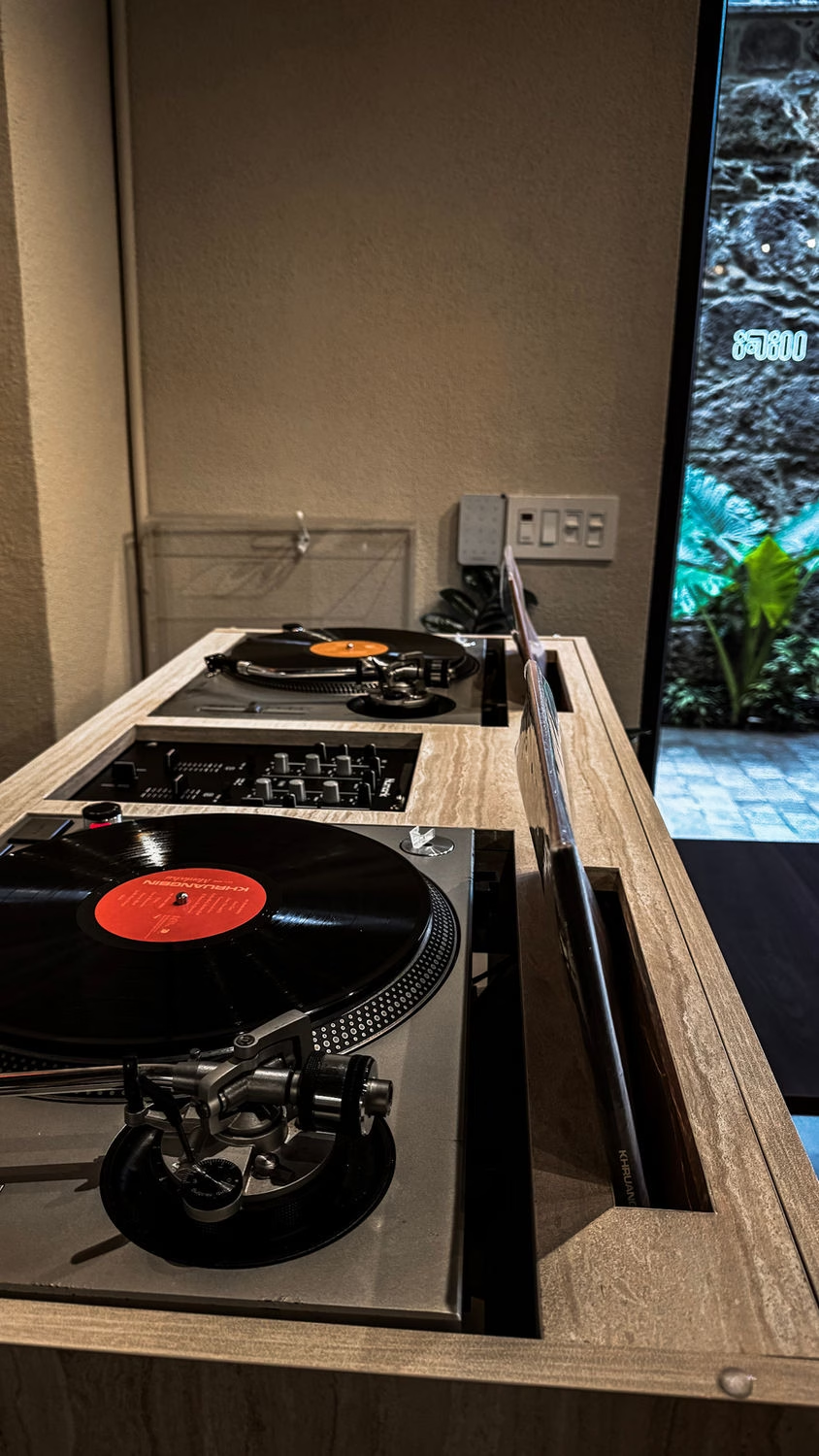
A listening coffee bar with a turntable and a library of LPs, where you choose a record and put it on for your own and everyone else's benefit. It's a lovely, slightly ridiculous idea that makes for a brilliant place to work, as long as you can resist spending 40 minutes flicking through the racks instead of doing your job, and the coffee is excellent. It's the most memorable place we've worked from in a long time.
Geisha Terroir Specialty Coffee Shop
Casco Viejo
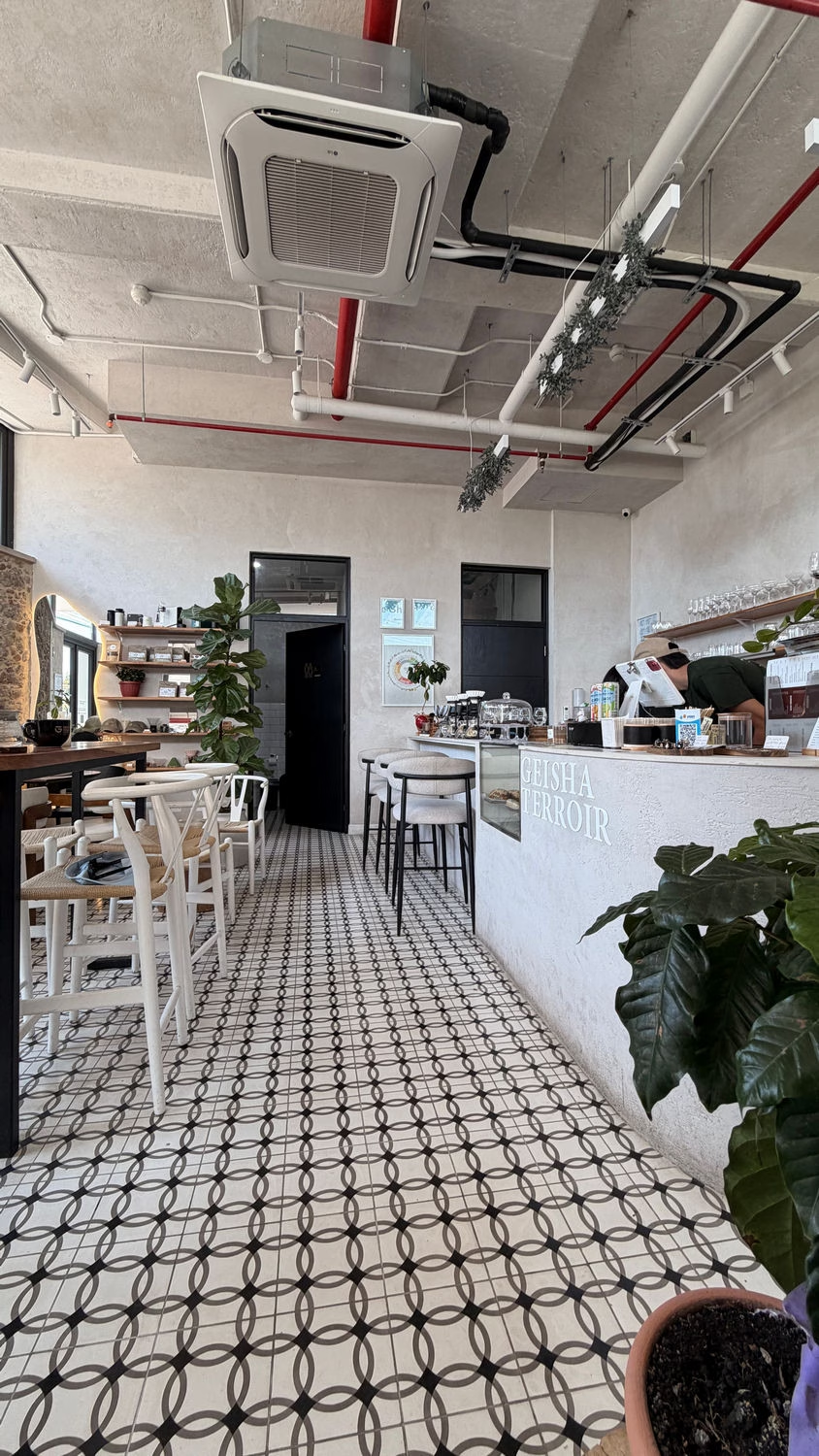
Right next door to Leto Hifi, with lots of natural light and plenty of space to spread out. As the name suggests, this is the place to get properly acquainted with geisha coffee, and it's another easy place to knock out a few hours.
Sisu Coffee Studio
Casco Viejo · Avenida B and Calle 9
A block or two from Leto and the most laptop-friendly of the three, with loads of space and, crucially, power sockets. Sisu opened in 2022 and belongs to the Lamastus Family Estates, one of Panama's leading coffee producers, so the beans are exceptional. You can also book a cupping class if you want to learn more, and the cookies are excellent too.
Coworking
Viajero Casco Viejo
Avenida B and Calle 12 · Day pass around $10
The old Selina building, now trading as part of the Viajero hostel chain, is the only real coworking option inside the old town, and the day pass includes the rooftop. It's convenient more than brilliant. We stayed in a private room here and would recommend it, and the adults-only hostel also has a rooftop pool and bar.
Panama Coworking Center
Obarrio
Popular with the startup crowd, and with a reputation for some of the fastest internet in the city.
The Cube
near Vía España · Around $15 a day or $60 a month
Very good value if you're staying a while, with dedicated desks and private offices available too.
Spaces
Banking district and Punta Pacífica · Day pass $29
The polished international chain, with meeting rooms and a receptionist, at international prices. It has around ten locations across the city, and a day pass lets you use any of them.
Internet and SIM cards
Fibre is widespread in the city and most decent apartments get 50Mbps or better, which is plenty for video calls, but ask your host for a screenshot of a speed test rather than trusting the listing. For mobile data, +Móvil and Tigo are the two main networks, and you'll need your passport to register a prepaid SIM. We paid $15 for 30 days of unlimited data on +Móvil, and if you'd rather sort it before you land, a 5GB eSIM for 30 days costs around $17.
Food & drink
Panamanian food doesn't have the international profile of Peruvian or Mexican cooking and isn't trying to. It's a crossroads cuisine that draws on Spanish colonial, Afro-Caribbean and indigenous cooking and, thanks to a century of canal traffic, a fair bit of everywhere else. It's hearty and more often fried than not, and it's very good indeed when you find it done properly.
What to eat
- Sancocho: The national dish, a clear and restorative stew of chicken and ñame (yam) heavily perfumed with culantro and served with rice. It's what Panamanians eat when they're hungover, and it's exactly as good as that implies.
- Ceviche: Usually corvina (sea bass) cured in lime with red onion and culantro, and eaten with crackers rather than the sweet potato you'd get in Peru. It's cheap and excellent.
- Ropa vieja: Shredded beef slow-cooked in tomato and peppers, served with rice and plantain.
- Carimañolas and hojaldras: Breakfast, essentially. Carimañolas are deep-fried yuca fritters stuffed with beef or cheese, and hojaldras are fried dough that will ruin your day in the best possible way.
- Patacones: Green plantain smashed and fried twice, served with almost everything.
- Seco Herrerano: The national spirit, a triple-distilled sugarcane liquor that locals drink as seco con leche, mixed with milk, which sounds appalling and is oddly delicious.
Mercado de Mariscos
The fish market sits at the edge of Casco Viejo, right where the old town meets the water, and it's the best-value eating in the city. Downstairs is the working market where the boats land their catch each morning, while outside and upstairs a cluster of stalls and cheap restaurants serve ceviche by the cup for a couple of dollars and whole fried fish for not much more. Go around midday and order the corvina ceviche to eat standing up. It's touristy now, but it's touristy because it's good.
Where to eat and drink
This list is unashamedly focused on the old town. There's a serious restaurant scene in San Francisco and Obarrio as well, which is worth exploring on a longer stay.
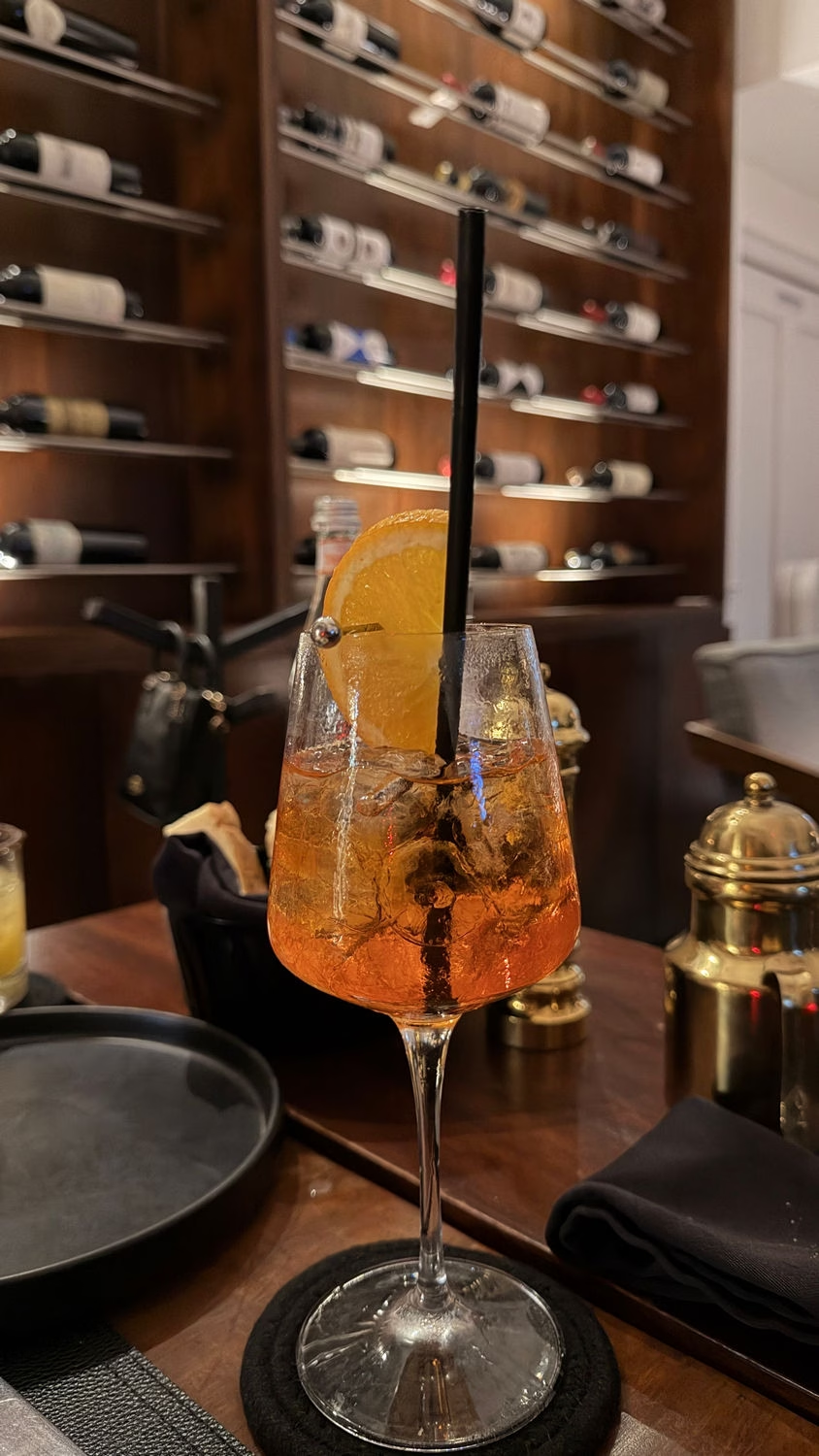
- Afrodisiaco Italian Modern Kitchen: The leading local Italian, and somewhere that never lets you down. Order the gnocchi and an Aperol Spritz.
- Kanibal: A rooftop restaurant cooking over open fire on the sixth floor of the Casco Parking building on Avenida B, and our favourite meal of the week. Casco is packed with rooftops, and this is the one we'd send you to first. Book ahead, arriving around sunset for a calmer meal or later in the evening when the DJ gets going.
- Lazotea: A rooftop restaurant and bar above Hotel Casa Panama at the edge of the old town, and perfect for a late drink if you've no interest in clubbing, as it stays open until 3am and serves food late. The dress code is smart casual, and the terrace tables are worth booking.
- Casa Casco: A five-storey house with restaurants on its lower floors and a cracking rooftop bar on top, which makes it a good bet for a group that can't agree on dinner.
Off the clock
Things to see and do
Panama City isn't somewhere you come to tick off a hundred sights. There are a handful of genuinely worthwhile ones and a lot of very hot walking in between, so plan around the heat and don't try to cram everything into one day.
Biomuseo
Our favourite
The surprise of our trip, and better than the canal. It's Frank Gehry's first building in Latin America, a riot of crumpled, brightly coloured metal at the start of the Amador Causeway that looks as if a paint factory has fallen over, and it ended up here because Gehry's wife is Panamanian. The museum opened in 2014 and tells the story of how the Isthmus of Panama rose out of the sea about three million years ago, joining two continents and splitting one ocean into two, which set off one of the biggest ecological reshuffles in the planet's history. Eight galleries take you through it, and the standout is Panamarama, a ten-screen projection space that puts you in the middle of Panama's ecosystems. It's compact enough to see in a couple of hours. It's closed on Mondays, so go on another morning and combine it with a walk or a cycle along the causeway.
$20 for non-residents · Tuesday to Sunday · Amador Causeway
The Panama Canal at Miraflores
The obvious one, and the one that needs expectations managing. Your ticket covers the museum floors and observation deck as well as a 3D IMAX documentary about the canal narrated by Morgan Freeman, which is excellent and worth the trip on its own. The canal itself can underwhelm, because you're looking at the original locks, which are much smaller than the new ones, and watching a ship inch through a lock is so slow it's borderline hypnotic. Go for the documentary with modest expectations for the rest, and check the transit schedule before you set off if you want to see a ship in the chamber.
Around $17 for non-residents · Daily, 8am to 6pm · Tickets online
Cerro Ancón
The big green hill you can see from most of the city, with the best view in Panama. It's 199 metres high and was part of the American-controlled Canal Zone until the Torrijos-Carter Treaties handed it back. The enormous Panamanian flag on the summit, roughly the size of a basketball court, was first raised in 1979 as the treaties came into force, and it still flies day and night. The walk up is a paved road that takes 30 to 40 minutes at a gentle pace and costs nothing. From the top you look down over the old town to the skyline across the bay, and on a clear day you can pick out the entrance to the canal. It's a proper patch of tropical forest too, so keep an eye out for sloths, agoutis, toucans and Geoffroy's tamarins. Go early, because by 9am you'll be cooking.
Free · Daily, 6am to 6pm · No bikes or skateboards on the climb
Panamá Viejo
The original Panama City, founded in 1519 and the first permanent European settlement on the Pacific coast of the Americas. It was flattened in 1671 when the Welsh privateer Henry Morgan sacked it, and the survivors moved a few miles west and built what is now Casco Viejo. What's left is a wide field of stone ruins with the cathedral bell tower still standing, alongside a very good modern museum and visitor centre, and it's UNESCO-listed together with the old town. Take an Uber there and back, about 15 minutes east of the centre, as the surrounding streets aren't ones to wander. Climb the tower for the view, and go early or late because there's no shade at all.
About 15 minutes by Uber · Usually closed on Mondays
Parque Natural Metropolitano
Genuine tropical rainforest inside the city limits, which very few capitals can claim. Seven short trails cover around 5km in total, with the most popular loop taking about 90 minutes. At the Cerro Cedro lookout you're standing in jungle looking straight at a wall of skyscrapers. Sloths, coatis and tamarins live here alongside a ridiculous number of birds, and as everywhere else in the city, it's a case of going early or not bothering.
About $4 for foreigners · Opens at 7am, closes at 4.30pm
Amador Causeway
A causeway built in 1913 from rock dug out of the canal, running roughly 6km into the Pacific to link four small islands to the mainland. Rent a bike at the entrance and ride out to the end for the view back to the skyline, with the Bridge of the Americas on one side and container ships queuing for the canal on the other. There are restaurants all along it, and the sea breeze makes it one of the few places in the city where you don't immediately melt.
Free · Bike hire at the entrance, a few dollars an hour
Rooftops in Casco Viejo
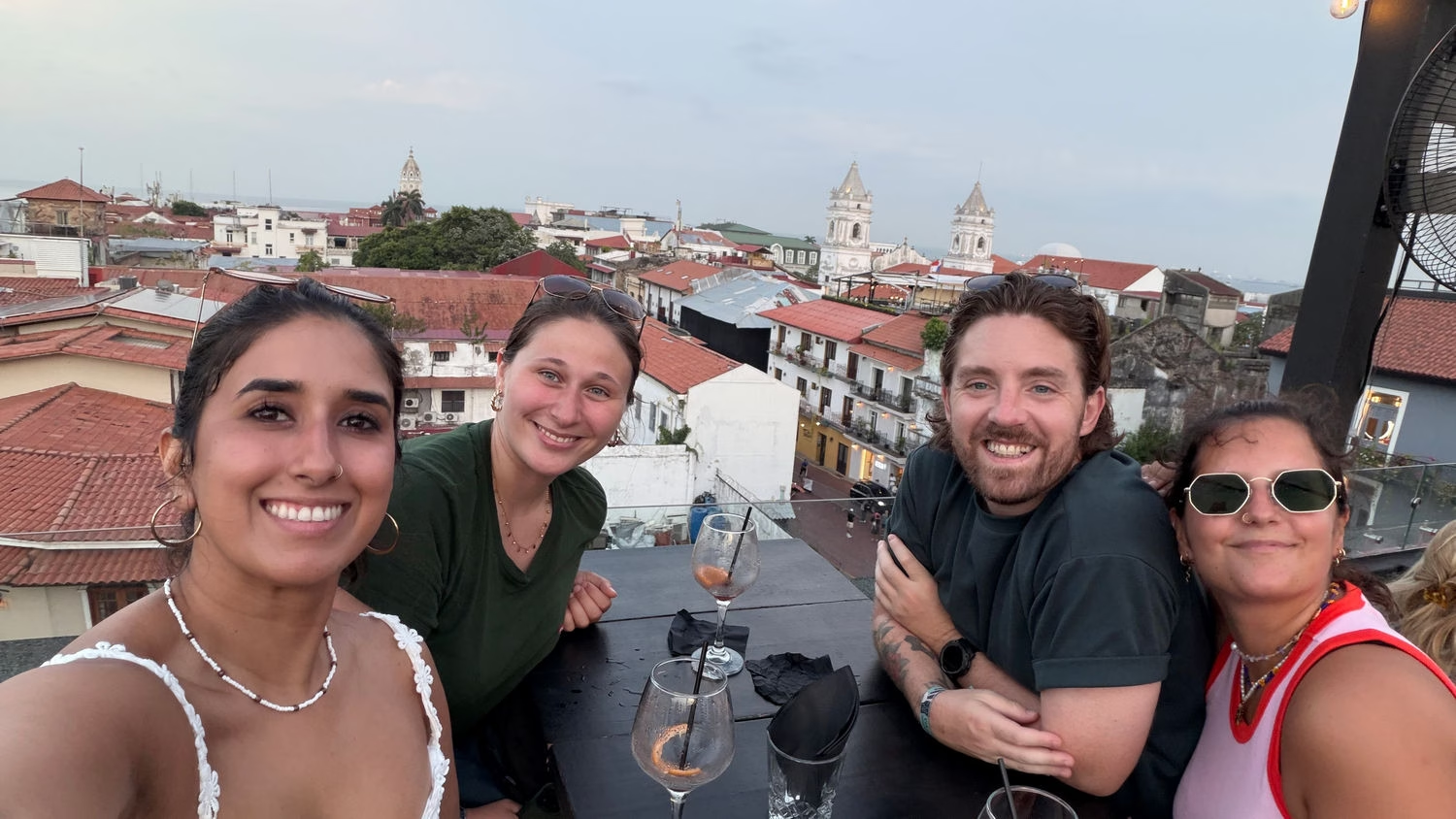
Not a sight as such, but it's what the old town does better than anywhere. Many of the restored buildings have a bar on the roof looking over the cathedral domes or across the bay to the skyline, and working your way through them is a perfectly respectable way to spend an evening. This close to the equator, sunset falls between 6pm and 6.45pm all year, so plan accordingly.
Paseo Las Bóvedas
Our favourite free spot
The seawall at the southern tip of Casco Viejo, where you can sit on the old Spanish fortifications with the entire skyline glittering across the bay in front of you. It's free and a five-minute walk from anywhere in the old town, and for our money it's the best thing in the city.
Keeping fit
Panama City is better for exercise than you'd expect for somewhere this hot and car-dependent, mainly because someone had the good sense to build a waterfront path along the front of it.
Cinta Costera
Run · Cycle
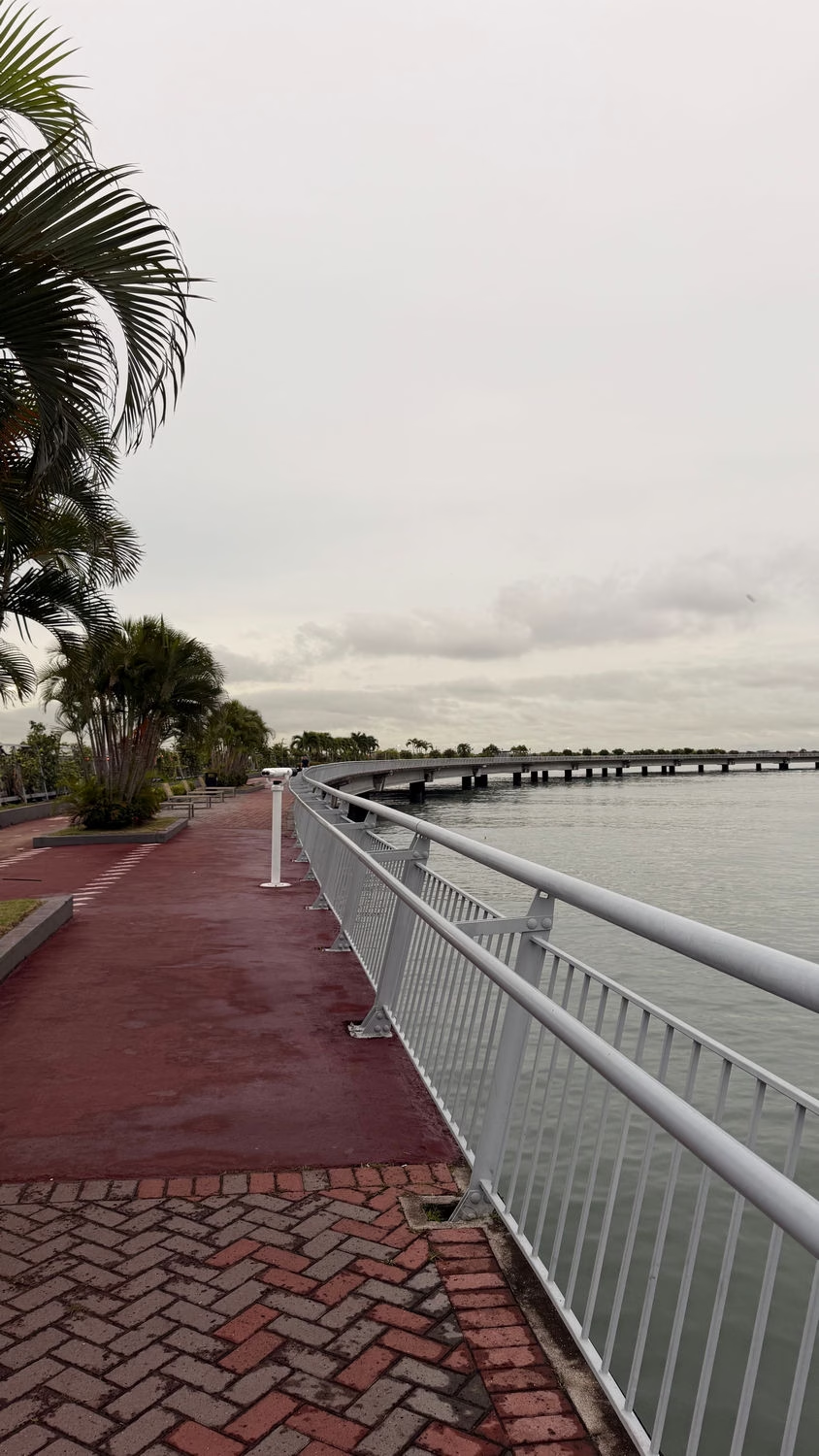
A landscaped waterfront strip along the Bay of Panama with wide paths and outdoor gyms dotted along it. Its three phases run for around 7.5km from Paitilla, around the old town and on towards the Bridge of the Americas, and the skyline views are superb.
Cinta Costera 3
Run · Cycle
The 2.6km viaduct that loops out over the sea around Casco Viejo has a dedicated path for running and cycling and makes a perfect out-and-back if you're staying in the old town. There isn't a scrap of shade, so go before 7am or after 5pm. Sunday is the best day, when the road closes to traffic until midday and the whole city comes out to run and cycle. It's one of the highlights of a week here.
Amador Causeway
Run · Cycle
About 5km each way out across the islands, flat as a pancake and with a sea breeze the Cinta doesn't get.
Parque Omar
Run
A 3.5km loop in San Francisco with a little rolling terrain and, crucially, actual trees.
Parque Natural Metropolitano
Run · Walk
Up to 5km of forest trails if you want to run with sloths watching you. It's hilly and humid, so don't expect a personal best.
Cerro Ancón
Walk · Run
Two kilometres of steep paved climb, brutal in this heat and a very effective workout.
Gyms, pools and everything else
The city is full of gyms. The big chains are Smart Fit and PowerClub, both of which sell day and monthly passes at reasonable prices, and a typical monthly membership costs around $45. Most modern apartment buildings have a decent gym of their own, which is worth filtering for when you book. Beyond that you'll find yoga studios and CrossFit boxes as well as boxing gyms and, this being a coastal city, paddleboarding and sailing out of Amador. Swimming is the underrated option, as plenty of buildings in Casco and Marbella have rooftop pools, and on a 33°C afternoon that's the only exercise anyone sensible is doing.
Cycling as transport isn't really on, because the traffic is too aggressive and the drivers too creative, but recreational cycling is great. Both the Cinta Costera and the Amador Causeway have proper segregated paths, with independent rental stands at the causeway entrance charging a few dollars an hour.
People and community
Panama City has a large, long-established expat population, but its nomad scene is smaller and more scattered than in the region's big hubs, so meeting people takes a little effort. InterNations hosts regular events in the city, and the Panama City expat groups on Facebook are active and full of practical answers. For Spanish practice, PTY Language Exchange runs regular evenings that bring locals and foreigners together, and the rooftop at Viajero is an easy place to strike up a conversation day to day.
Tips
Positives
The Copa stopover turns a layover into a free week in the city.
Add it when you book and you can stay for up to 15 days on one leg of your trip without paying any more for the flight.
Casco Viejo packs a superb café scene into a few blocks.
Three of the city's best cafés sit within a short walk of each other, and one of them lets you choose the music.
You can drink the world's most expensive coffee for under $20.
Panama's geisha holds the world auction record, and a competition-grade cup in Casco Viejo costs $8 to $20.
Fibre is widespread and fast enough for video calls.
Most decent apartments get 50Mbps or more, so you're unlikely to be caught short on a call.
Rainforest and a waterfront running track are both inside the city.
Parque Natural Metropolitano and Cerro Ancón put sloths and toucans a short Uber ride away, and the Cinta Costera gives you kilometres of flat running by the sea.
Longer stays are straightforward.
A nomad visa that lasts up to 18 months and a time zone that matches US hours make Panama an easy base for a longer stint.
Negatives
The heat and humidity never let up.
Highs sit between 31°C and 34°C every month, and you'll be grateful for air conditioning every single day.
Outside the old town, the city is built for cars.
Traffic is genuinely horrendous, and a short journey can take 40 minutes.
Prices are in dollars, and Casco charges a premium.
Specialty coffee and apartments in the old town cost more than in much of Latin America.
Service charges and tip prompts add up quickly.
Between the 10% service charge and the prompts on card machines, you can easily overpay without noticing.
The old town's edges are sudden and unmarked.
Two of the city's higher-crime districts border Casco Viejo directly, so know where the restored streets end.
Tips
Add the stopover when you book.
Copa's free stopover can't be added to an existing ticket afterwards.
Stick to the red-brick streets.
In Casco Viejo, plain tarmac underfoot means you've left the restored zone.
Check the days on your entry stamp.
Officers can grant fewer than the maximum, and an extension will only top you up to 90 days.
Ask for a speed test before you book.
A screenshot from your host is worth more than whatever the listing says.
Get outdoor plans done before 9am.
After that the heat takes over, so save the afternoons for cafés and museums.
Check the bill before you tip.
A 10% service charge is often already included.
Take an Uber home at night.
Even for a few blocks, it only costs about $3.
Time the canal with a transit.
Check the Miraflores transit schedule so you actually see a ship in the locks.
Order geisha as a pour-over.
Drink it black, as milk drowns the flavours you're paying for.
Bring your passport to buy a SIM.
+Móvil and Tigo both need it to register a prepaid line.
Use ATMs inside banks or shopping centres.
They're a safer bet than standalone machines on the street.
Panama City · Overall 6.6/10
Work setup 8 · Walkability 4 · Value 6 · Safety 7 · Lifestyle 8 · Stayed one week, August 2026
Working from Panama City?
Nomad Register keeps count of your days in Panama against your visa limit and turns your trip into a request your employer can approve in a click, across 200+ destinations.
Log your Panama trip · For employers
Need sign-off first? Create a free remote work request.
Frequently asked questions
Is Panama City good for digital nomads?
Yes, particularly for short stays based in Casco Viejo, which has excellent cafés and reliable fibre internet. Copa's free stopover also makes it easy to add a week to a trip through the Americas, although outside the old town the city is built for cars.
Where should digital nomads stay in Panama City?
Casco Viejo is the best base for stays of up to a couple of months, as it's the only genuinely walkable part of the city. For longer stays, El Cangrejo offers lower rents and its own metro station.
How long can I stay in Panama as a tourist?
British citizens and most EU nationals can stay for up to 90 days without a visa, while US and Canadian citizens can stay for 180 days. Officers can grant fewer days than the maximum, so check your entry stamp.
Can I work remotely in Panama on a tourist stamp?
Panama's tourist rules don't explicitly allow or forbid remote work, so working for a foreign employer while you visit sits in a grey area. If you plan to stay for months, Panama's Short Stay Visa for Remote Workers is the safer route.
Does Panama have a digital nomad visa?
Yes. The Short Stay Visa for Remote Workers lasts nine months and can be renewed once, and it requires at least $36,000 a year in foreign-source income. Our Panama Digital Nomad Visa guide covers the full requirements.
How fast is the internet in Panama City?
Fibre is widespread, and most decent apartments offer 50Mbps or more. Ask your host for a speed test screenshot before you book.
How much does it cost to live in Panama City as a digital nomad?
Budget around $1,000 a month before rent if you eat out regularly, plus $900 to $1,600 a month for a furnished one-bedroom long let in El Cangrejo or $1,300 or more for an Airbnb in Casco Viejo.
Is Panama City safe for digital nomads?
The neighbourhoods where visitors stay are generally safe, and Casco Viejo is heavily policed, with petty theft the main risk. Avoid walking into El Chorrillo or Santa Ana, which border the old town, and take an Uber at night.
When is the best time to visit Panama City?
The dry season from January to April is the best time, and February is the driest month. It's hot all year, and the wet season from May to November brings heavy afternoon downpours, with October the wettest month.
What time zone is Panama City in?
Panama uses UTC−5 all year with no daylight saving, so it matches New York in the northern winter and is an hour behind it in summer.
Can you drink the tap water in Panama City?
Tap water in Panama City is generally safe to drink, though you may occasionally be advised to boil it during service disruptions. Outside the city, bottled or filtered water is the safer choice.
Where next
- Rio de Janeiro: beaches, Carnival and a big remote work scene in Brazil
- Mexico City: food, culture and one of the biggest nomad hubs in the Americas
- Valencia: Spain's third city, with beaches, paella and a lower cost of living
- Antigua Guatemala: a colonial town of volcanoes, coffee and Spanish schools
- Panama Digital Nomad Visa guide: requirements, income, fees and how to apply
- All city guides
About this guide
James is the founder of Nomad Register and has been a full-time digital nomad for around two years. He spent a week in Panama City in August 2026 on a Copa stopover between Ecuador and Brazil, working from cafés in Casco Viejo, and this guide is based on that visit, with facts and prices checked in November 2026. You can read his original trip report on The Nest.
This guide is for general information only and is not legal or tax advice. Visa rules and prices change, so confirm entry requirements with Panama's Servicio Nacional de Migración or your government's travel advice before you travel.