Spain · Visited July 2025 · 2 months
Seville for Digital Nomads
Andalusia's flat, walkable capital, where the café culture is superb and the summer heat is no joke.
Great café culture · Flat and bike-friendly
By James, founder of Nomad Register · Updated November 2026
Seville at a glance
- Overall
- 8/10
- Work setup
- 7/10
- Walkability
- 9/10
- Value
- 8/10
- Safety
- 8/10
- Lifestyle
- 8/10
- Living costs
- About €1,000 a month before rent
- Tourist stay
- 90 days in any 180 across the Schengen Area for most visitors
- Nomad visa
- Available: a three-year permit if you apply in Spain
- Time zone
- CET (UTC+1), CEST (UTC+2) from late March to late October
- Currency
- Euro
- Internet
- Fibre almost everywhere, and we averaged 206Mbps
- Airports
- SVQ (Seville), about 10km from the centre
- Population
- About 690,000 (city), over 1.5 million (metro)
- Plugs
- Types C and F, 230V
Climate: Mild, sunny winters and fierce summers, with most of the rain falling between October and April (best month: May). Jan 6–16°C, 66 mm rain; Feb 7–18°C, 50 mm rain; Mar 9–22°C, 36 mm rain; Apr 11–23°C, 54 mm rain; May 14–27°C, 30 mm rain; Jun 18–32°C, 10 mm rain; Jul 20–36°C, 2 mm rain; Aug 20–36°C, 5 mm rain; Sep 18–32°C, 27 mm rain; Oct 14–26°C, 68 mm rain; Nov 10–20°C, 91 mm rain; Dec 7–17°C, 99 mm rain
Overview
A brilliant base, as long as you dodge the summer
Seville is the capital of Andalusia and one of Spain's biggest cities, home to around 690,000 people on the banks of the Guadalquivir. It's a flat, compact city of Moorish palaces and tiled squares, with narrow lanes shaded by bitter orange trees. Life here moves at a gentler pace than in Madrid or Barcelona. For remote workers, the draw is a café culture that's happy to have laptops around, along with almost 200km of cycle lanes that make a car pointless.
We spent two months here in the summer of 2025, based in La Macarena, and the verdict was an easy yes. The café culture is top-tier and the pace is relaxed, and while Seville doesn't have the nomad reputation of Lisbon or Barcelona, that's part of its charm. The one big caveat is the heat. We came in July, which was a mistake, as Seville is one of the hottest cities in Europe and summer afternoons regularly pass 40°C.
Two things have changed since our visit. High-speed trains between Madrid and Andalusia were suspended after a fatal collision near Urda, in Toledo, on 28 October 2026, and in late November there was still no official date for services to resume, so check before you plan to arrive by train. Housing rules have also tightened. Seville has capped tourist flats at 10% of homes in each neighbourhood and stopped issuing new licences in the old town, while national rules introduced in October 2026 mean landlords offering lets of a few months need a documented reason for your stay.
For a first stay, come in spring or autumn and give it a month or two. Base yourself in Triana, which is where we'd stay if we went back, or around the Alameda for a livelier scene, then get on a bike and let the city's flatness do the rest.
Nomad-friendly without the clichés
"Seville is a brilliant choice for digital nomads, particularly if you're not into the whole coconut-flat-white, Bali-in-Europe scene."
James, founder of Nomad Register
Seville suits you if
- you want a European base that feels local rather than built around nomads
- you like working from cafés, as plenty of them are happy to have laptops
- you run or cycle, as the city is flat and the riverside paths are superb
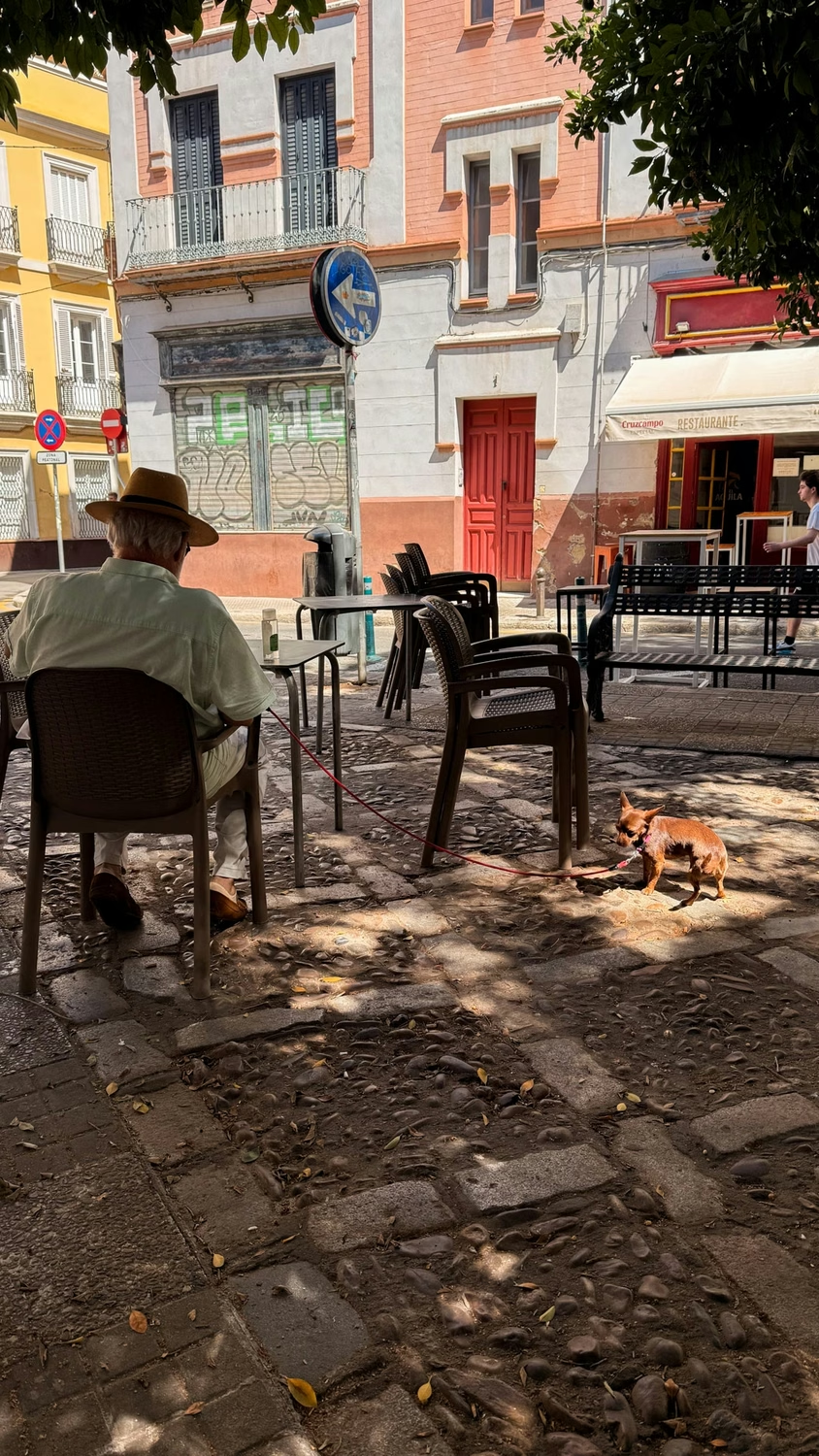
- you're travelling with a dog, as Seville is extremely dog-friendly
It's less suited to you if
- you can only come in July or August, when 40°C afternoons are common
- you want a big, organised nomad scene with regular meetups
- you rely on ride-hailing, as Uber is expensive and surge pricing is common
- you dislike crowds, which peak in spring around Semana Santa and the Feria
At a glance
Work setup · Good · 7/10
Seville's real strength is its cafés, and plenty of them are happy for you to work for a few hours as long as you keep ordering. Our favourite, Feria 83, made a great morning office. Formal coworking is thinner on the ground than in Valencia or Barcelona, with a couple of dozen spaces, but Arcadia and workINcompany are both dependable and reasonably priced by European standards.
Walkability · Excellent · 9/10
The city is flat and compact, so you can walk from La Macarena to the cathedral in about half an hour and cross the river to Triana a few minutes later. Almost 200km of cycle lanes and the SEVici bike-share fill the gaps. It only misses top marks because of the heat, which makes walking anywhere after midday in summer a test of endurance.
Value · Great · 8/10
Seville is a bargain compared with Madrid or Barcelona. A menú del día averages around €14 in Andalusia, and a tapa in a traditional bar can still cost under €2. Rents have climbed, but at an average asking price of €13.4 per square metre a month in October 2026, they remain manageable for a big European city.
Safety · Great · 8/10
Violent crime is rare, and you'll see solo travellers walking home late and children playing in the squares. Petty theft is the main risk, particularly in the busy old town and around Plaza de España, so keep your phone off café tables. In summer, the heat is the bigger danger.
Lifestyle · Great · 8/10
Seville packs a lot into a small footprint, from the Real Alcázar to flamenco in tiny tablaos, and the tapas scene alone could fill a two-month stay. Spring brings Semana Santa and the Feria de Abril, two of Spain's great festivals. The nomad community is smaller and less organised than in Valencia, and the summer heat empties the streets, which keeps the score at an 8.
Plan
Getting there and getting around
Seville is easy to reach from anywhere in Europe. The airport has direct flights from across the continent, including from the UK, and if you're already in Spain, the train is usually the better option whenever the high-speed line is running.
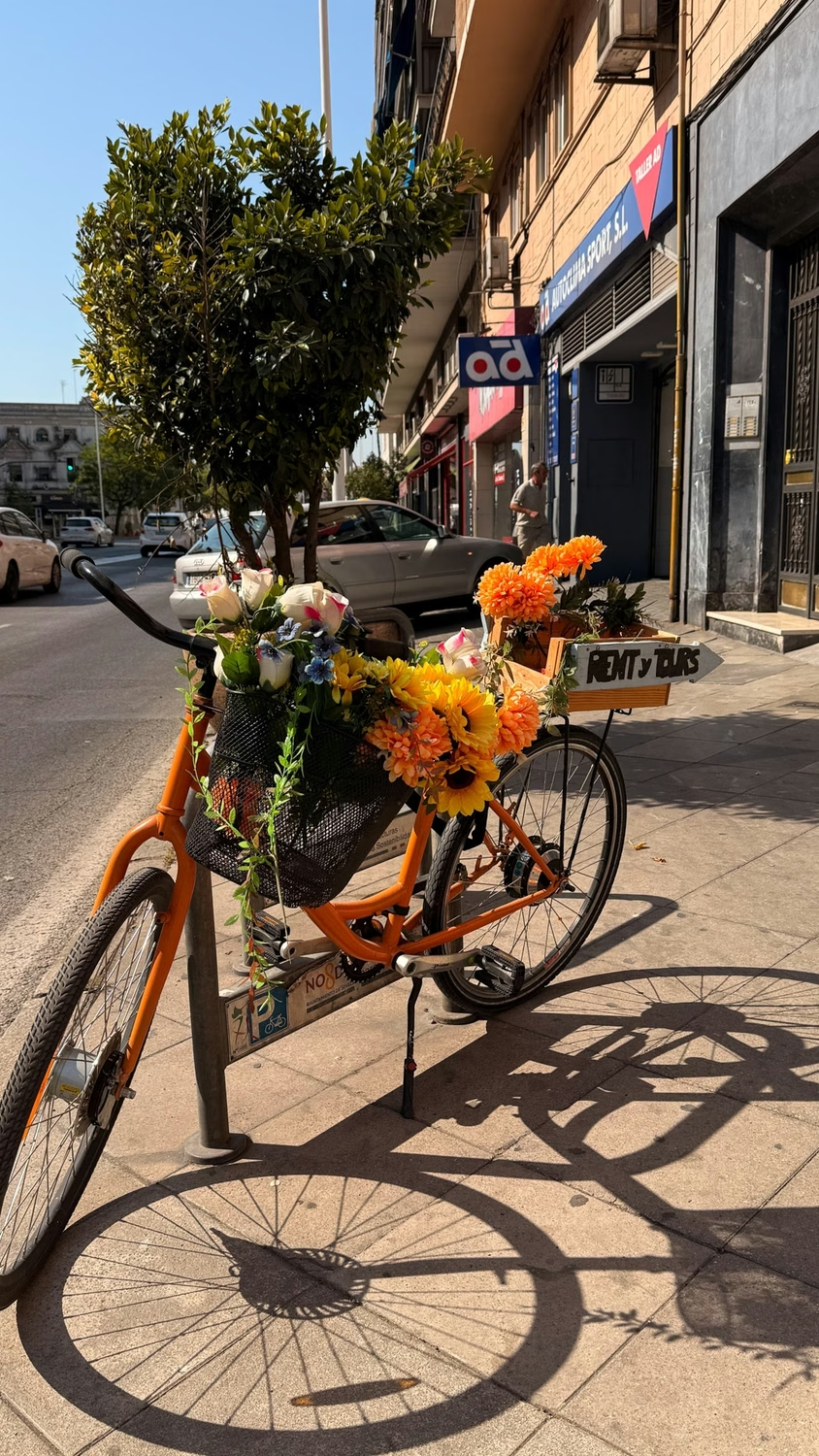
From the airport
Seville Airport (SVQ) is about 10km from the city. The EA airport bus runs every 10 to 30 minutes depending on the time of day, from early morning until around midnight, calling at Santa Justa station and Prado de San Sebastián on the way to Plaza de Armas, about 35 minutes away. A single costs €6. Taxis charge a fixed fare to the city of €26 on weekdays between 7am and 9pm, and €29 at night and at weekends, including public holidays.
By train
Our pick
Spain's high-speed trains are the best way to arrive from Madrid. On a normal timetable the fastest services take 2 hours 38 minutes, with up to 22 trains a day run by Renfe's AVE and Avlo, iryo and OUIGO, and fares start from around €7 to €9 if you book early. Direct trains from Barcelona take around six hours. Every service arrives at Santa Justa, about 2.5km from the historic centre, which is a 20-minute walk or a short taxi ride.
The high-speed line between Madrid and Andalusia has been closed since a collision near Urda, in Toledo, on 28 October 2026. In late November 2026 there was still no official date for it to reopen, and trains are expected to run less often at first, so check Renfe or your operator before you book.
By coach or car
If you're on a tight budget and time isn't a factor, ALSA and FlixBus both run long-distance coaches into Plaza de Armas. The journey from Madrid takes about six hours and 20 minutes, with fares from around €24.
To explore more of Andalusia, a hire car gives you total freedom, but it's no use in Seville itself, where the streets are narrow and many are one way. Parking is a pain and expensive, though there are underground car parks in the centre. You'll also meet the gorrillas, unofficial parking attendants who wave you into a space and expect a euro or two for it. Give them one or park elsewhere.
Getting around the city
Seville is made for walking and cycling. There are almost 200km of cycle lanes, and SEVici, the public bike-share, has around 2,600 bikes at 268 stations. A seven-day pass costs €13.33 and an annual subscription €33.33, and the first 30 minutes of every ride are free. Given how narrow and congested the centre is, a bike is often faster than a car.
Tussam runs the city buses, and a single ticket costs €1.40. If you're staying a while, get a rechargeable Tarjeta Multiviaje, which brings the price of a trip down to €0.41 in 2026 thanks to state and city subsidies. Seville has a single metro line, where a journey within one zone costs €1.35, and Line 3 is under construction with no opening date yet. The Metrocentro tram runs a short route from Plaza Nueva to Luis de Morales.
Taxis are plentiful and usually cheaper than ride-hailing. Uber, Cabify and Bolt all operate, but we found Uber expensive and unreliable, with surge pricing that was hard to avoid, so local taxis or a bike are the better bet. Shared e-scooters were pulled from the city's streets in 2025, so don't count on finding a Lime or a Voi.
Cost of living
About €1,000 a month before rent
That's our estimate for one person who eats out a few times a week and pays for a coworking membership and a gym. Skip the coworking and you'll get by on closer to €850. Seville is a bargain compared with Madrid or Barcelona, and eating out is where you'll notice it most: a menú del día, the fixed-price weekday lunch, averages €14 in Andalusia, and a tapa in a traditional bar can still cost as little as €1.20.
| Item | Typical price |
|---|---|
| Café con leche or cappuccino, average | €1.90 |
| Tapa in a traditional bar | €1.20–1.60 |
| Tapa in a modern or touristy bar | €3–5 |
| Menú del día, Andalusian average | €14 |
| Draught beer | €2 |
| Tussam bus single | €1.40 |
| Bus trip with a Tarjeta Multiviaje (2026 subsidised fare) | €0.41 |
| Metro single, one zone | €1.35 |
| EA airport bus | €6 |
| Airport taxi to the city, weekday daytime fixed fare | €26 |
| SEVici bike-share, seven days | €13.33 |
| Coworking day pass | €15–20 plus VAT |
| Coworking monthly desk | €149–170 plus VAT |
| Gym, every four weeks (Basic-Fit) | €25–35 |
| Prepaid SIM, 50GB a month (Digi) | €7 |
| Prepaid SIM, 60GB for 28 days (Movistar) | €10 |
| One-bedroom long let, central, monthly (our estimate) | €650–900 |
| One-bedroom Airbnb, monthly (what we paid in summer 2025) | about €1,400 |
Sources: our visit in July 2025, Hostelería de España and Edenred (menú del día), El Español (tapas), Numbeo (coffee and beer), Tussam, Metro de Sevilla and Aena fares, the Junta de Andalucía's 2026 airport taxi tariffs, SEVici, Basic-Fit, Digi, Movistar, coworking listings and idealista rent data, checked November 2026. We paid £1,200 for our Airbnb, converted at the July 2025 average rate. Confidence: medium.
Spain uses the euro, and cards are accepted almost everywhere, even for small amounts. Tipping isn't expected, though rounding up or leaving a euro or two for good service is appreciated.
Finding somewhere to live takes more planning than it used to. For stays of under a month, holiday lets are your main option, but supply is shrinking. In 2024 the city council capped tourist flats at 10% of homes in each of Seville's 108 neighbourhoods, and the old town and part of Triana count as saturated, so no new licences are being issued there. Every short-term and seasonal let advertised online also needs a number from Spain's national rental registry, which has been compulsory since July 2025.
For anything from one to eleven months, most nomads look for a seasonal let, known as an alquiler de temporada. Since 8 October 2026, national rules have required these contracts to state a genuine temporary reason that can be documented, such as work, and to run for more than 31 days and generally no more than 12 months. Congress's standing committee confirmed the rules in November 2026, but they could change again after the general election on 29 November, so check the latest before you sign anything.
Rents have risen but remain moderate for a big European city. Idealista put the average asking rent at €13.4 per square metre a month in October 2026, up 3.3% on a year earlier, with Los Remedios and the centre the priciest of the districts in this guide and Macarena the cheapest. We paid £1,200, about €1,400, for a one-bedroom Airbnb in the height of summer, which shows how much more short lets cost than a long let. Idealista is the main listings site, while Spotahome and HousingAnywhere specialise in furnished mid-term lets.
When to visit
Spring and autumn are the sweet spots
Seville has hot, dry summers and mild, damp winters, with close to 2,900 hours of sunshine a year. Winter days are pleasant, with highs of 16 to 18°C from December to February, while July and August average highs of 36°C and regularly go well beyond that. In 2025 the airport weather station recorded 30 days at 40°C or more, a record, and during that August's heatwave the Tablada station in the city reached 45.2°C.
The best time to come is spring. March to May brings warm days, and the city is at its most beautiful when the orange blossom is out, though it's also the busiest and most expensive time of year. May is our pick, with highs around 27°C. October and November are the other good window, with warm evenings and fewer tourists, though November brings some of the year's heaviest rain. December to February is cooler and wetter but still very comfortable compared with most of Europe.
We came in July and wouldn't do it again. As we wrote our report, it was 43°C outside. Locals leave if they can, and air conditioning becomes your best friend, so make sure any summer rental has it. If you can handle the heat, prices drop and you'll have more space to yourself.
Spring is also festival season. Semana Santa, Holy Week, fills the old town with processions, and in 2027 it runs from Palm Sunday on 21 March to Easter Sunday on 28 March. The Feria de Abril follows from 12 to 18 April 2027, a week of flamenco dresses and horse-drawn carriages, with Sevillanos dancing late into the night in private marquees called casetas. Both are unforgettable, but accommodation prices jump and the centre is packed, so book early or plan around them.
| Month | High | Low | Rain | Notes |
|---|---|---|---|---|
| January | 16°C | 6°C | 66mm | Mild days, cool nights |
| February | 18°C | 7°C | 50mm | Mild, with the odd shower |
| March | 22°C | 9°C | 36mm | Semana Santa from 21 March in 2027 |
| April | 23°C | 11°C | 54mm | Feria de Abril, 12 to 18 April 2027 |
| May | 27°C | 14°C | 30mm | Our pick |
| June | 32°C | 18°C | 10mm | Hot and dry |
| July | 36°C | 20°C | 2mm | Fierce heat, best avoided |
| August | 36°C | 20°C | 5mm | Hottest, and many locals are away |
| September | 32°C | 18°C | 27mm | Still hot, cooling slowly |
| October | 26°C | 14°C | 68mm | Warm, and the rain returns |
| November | 20°C | 10°C | 91mm | Mild but damp |
| December | 17°C | 7°C | 99mm | The wettest month |
Source: AEMET climate normals for Sevilla Aeropuerto (1981 to 2010).
How long to stay
A month or two is ideal. That's long enough to settle into a café routine and find your favourite tapas bars, and short enough that the Schengen clock won't be a worry unless you're spending plenty of other time in Europe.
Working remotely and visas
Digital nomad visa available
- Tourist stay
- 90 days in any 180 (Schengen)
- Nomad visa
- 1-year visa, or a 3-year permit from inside Spain
- Income
- 200% of the minimum wage, about €3,000 a month from 2027
- Processing
- Within 20 days when applying from inside Spain
- Time zone
- CET (UTC+1), CEST (UTC+2) in summer
Spain is in the Schengen Area, so most visa-exempt visitors, including British and American citizens, can stay for up to 90 days in any 180-day period across all Schengen countries combined, not just Spain. EU and EEA citizens can live and work here freely. If you're British, your passport must have been issued less than 10 years before the day you arrive and be valid for at least three months after the day you plan to leave.
The EU's Entry/Exit System has been fully up and running since 10 April 2026, so your fingerprints and photo are taken at the border on your first visit and every entry and exit is logged digitally, which means overstays are flagged automatically. ETIAS, the EU's €20 travel authorisation for visa-exempt visitors, still had no confirmed start date in November 2026. Don't be tempted to overstay: while we were in Spain, a British traveller who overstayed by a week or two was given a three-year ban from the whole Schengen Area. Track your days with our Schengen calculator, and check our ETIAS guide for the latest.
Can you work remotely on a tourist stay?
Spain has no specific rules for remote workers on visa-free stays. A short stay is meant for tourism and business visits, and you can't work for Spanish companies or clients. Answering emails for a foreign employer for a few weeks is widely treated as a grey area, and as long as your main reason for being in Spain isn't work, you're unlikely to run into trouble, but it isn't a right. If you plan to work from Spain for longer, the nomad visa is the proper route. Our guide to working remotely on a tourist visa explains the risks.
The digital nomad visa
Spain's digital nomad visa, the visado para teletrabajo de carácter internacional, is one of the most sought-after in Europe and one of the harder ones to get. You need to work remotely for a company outside Spain, or be self-employed with Spanish clients making up no more than 20% of your work, and earn at least 200% of Spain's minimum wage. That comes to about €3,000 a month from 1 January 2027, when the minimum wage rises to €1,286 a month over 14 payments. You'll also need a degree or at least three years of professional experience, along with health insurance from a company authorised to operate in Spain.
Apply at a consulate and you'll get a visa valid for up to a year. Apply from inside Spain after arriving legally and you'll get a residence permit of up to three years, with a decision due within 20 days. The permit can then be renewed for two years at a time, and holders can opt into Spain's special tax regime for inbound workers, the so-called Beckham Law, which charges a flat 24% on income up to €600,000. Speaking from experience, we'd strongly recommend using a lawyer. Our Spain digital nomad visa guide covers the full requirements.
Spend more than 183 days in Spain in a calendar year, or make Spain the main base of your business or economic interests, and you'll normally become a Spanish tax resident. If you're staying long-term, take advice and keep an eye on your day count.
Working hours
Seville runs on Central European Time, an hour ahead of the UK all year, even though it sits further west than London. That suits European teams and works for the US East Coast, six hours behind for most of the year, so your afternoons overlap with their mornings. The West Coast, nine hours behind, means evening calls. Use our time zone overlap calculator to find the hours that work.
Spanish days run later than you might be used to. Lunch is usually between 2pm and 4pm, and dinner rarely starts before 9pm, which in summer is when the streets finally come back to life.
If your employer needs to approve the trip first, you can create a free remote work request and send it to them for sign-off.
Safety
Safe and relaxed, with the usual pickpockets
Seville is a safe city by European standards. You'll see solo travellers walking home late at night and children playing in the squares, and violent crime is rare. Petty theft is the main risk, especially in the crowded old town and around Plaza de España. The UK government warns that thieves in Spain use distraction techniques and often work in teams, so keep your bag closed and your phone off café tables.
The city feels calmer than Barcelona or Madrid. Some outer suburbs are rougher, though as a visitor you're unlikely to end up there, and parts of La Macarena are less consistent on safety and cleanliness than the centre, so check the specific street before you book.
One quirk you'll notice is the gorrillas, the unofficial parking attendants who guide drivers into street spaces for a euro or two. They can look a little intimidating but are generally harmless.
Practical advice
- Keep your phone and wallet zipped away in crowds, particularly during Semana Santa and the Feria.
- Don't leave your phone on the table at street cafés.
- In summer, stay out of the sun in the afternoon and follow AEMET's heat warnings, which turn red at 44°C in the countryside around Seville.
- Save 112 for emergencies, and consider AlertCops, the Spanish police app the UK government mentions.
Tap water in Seville is safe to drink and has a good reputation, with some calling it the best tap water of any big Spanish city.
Healthcare
Spain has excellent healthcare. Seville's big public hospitals include the Hospital Universitario Virgen del Rocío, south of the centre, and the Hospital Universitario Virgen Macarena, close to the neighbourhood we stayed in, while private options include Quirónsalud's Sagrado Corazón hospital and its Infanta Luisa hospital in Triana. Pharmacies, marked by a green cross, are everywhere, and some stay open overnight on a rota.
If you're an EU citizen, your EHIC covers state healthcare, and British visitors can use a GHIC. Neither replaces travel insurance, which you'll need for private treatment and repatriation. If you're applying for the digital nomad visa, you'll need public cover or private health insurance from a company authorised to operate in Spain. In an emergency, call 112.
Live & work
Where to stay
Seville is compact, and most nomads stay in a handful of barrios close to the centre. All of them are within walking or cycling distance of the old town, so pick the atmosphere you want rather than worrying about location. If we went back, we'd stay in Triana. This time we based ourselves in La Macarena, which was a great-value introduction to everyday Seville.
Triana
Our pick
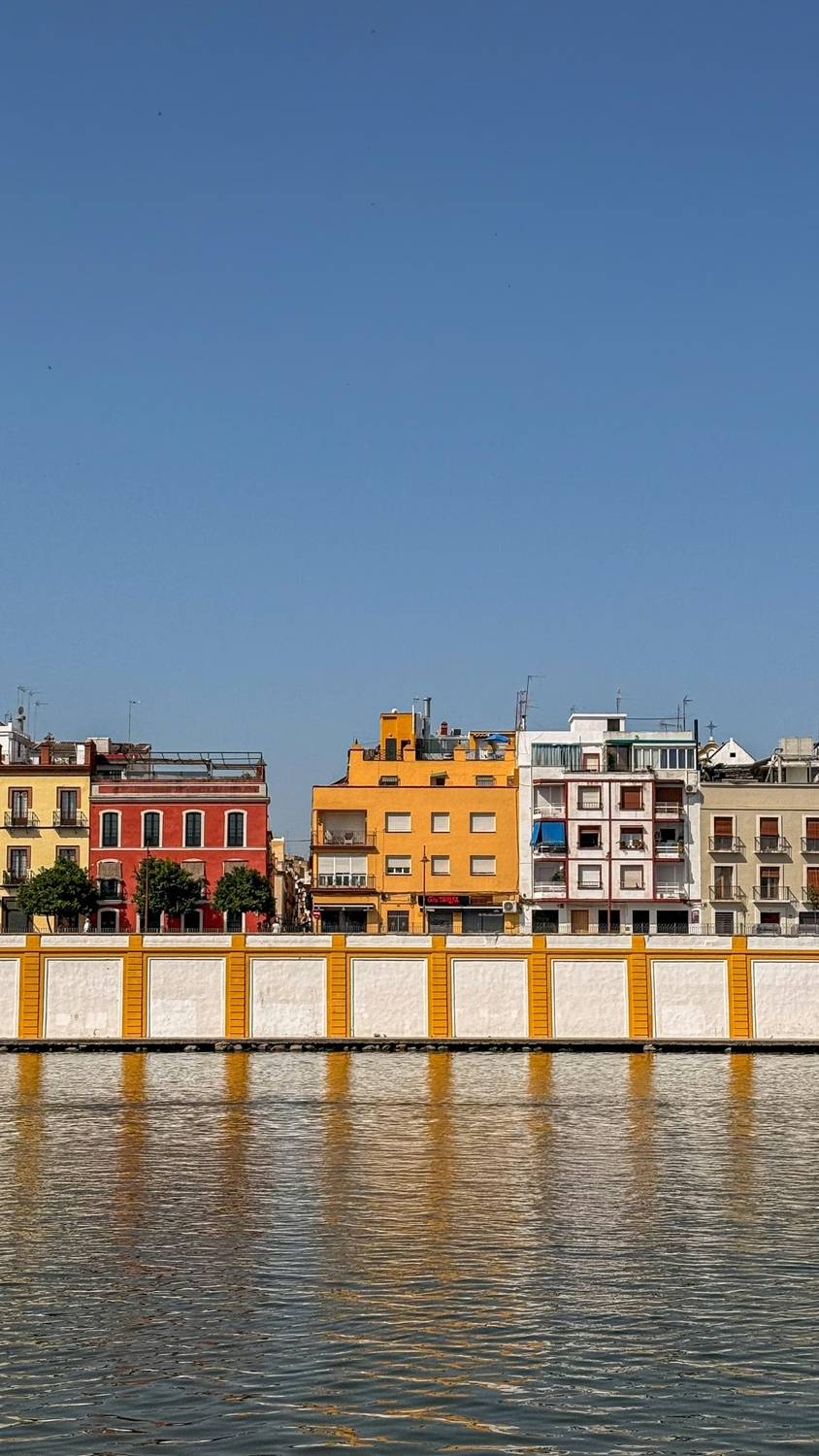
Cross the Guadalquivir and you're in Triana, one of Seville's most characterful neighbourhoods, known for its ceramic workshops and its strong community feel. It's less touristy than the old town but still within walking distance of everything, and the riverfront along Calle Betis is one of the best spots in the city for an evening drink. If we came back to Seville, this is where we'd stay.
Pros
- An authentic, local atmosphere
- Loads of tapas bars and terraces
- Peaceful but still central
- The river on your doorstep
Cons
- Fewer coworking spaces
- The street layout can be confusing
Rent guide: one-bed long lets from about €700 to €850 a month
Work from: Triana's cafés, or Arcadia across the river in the old town
La Macarena
Where we stayed
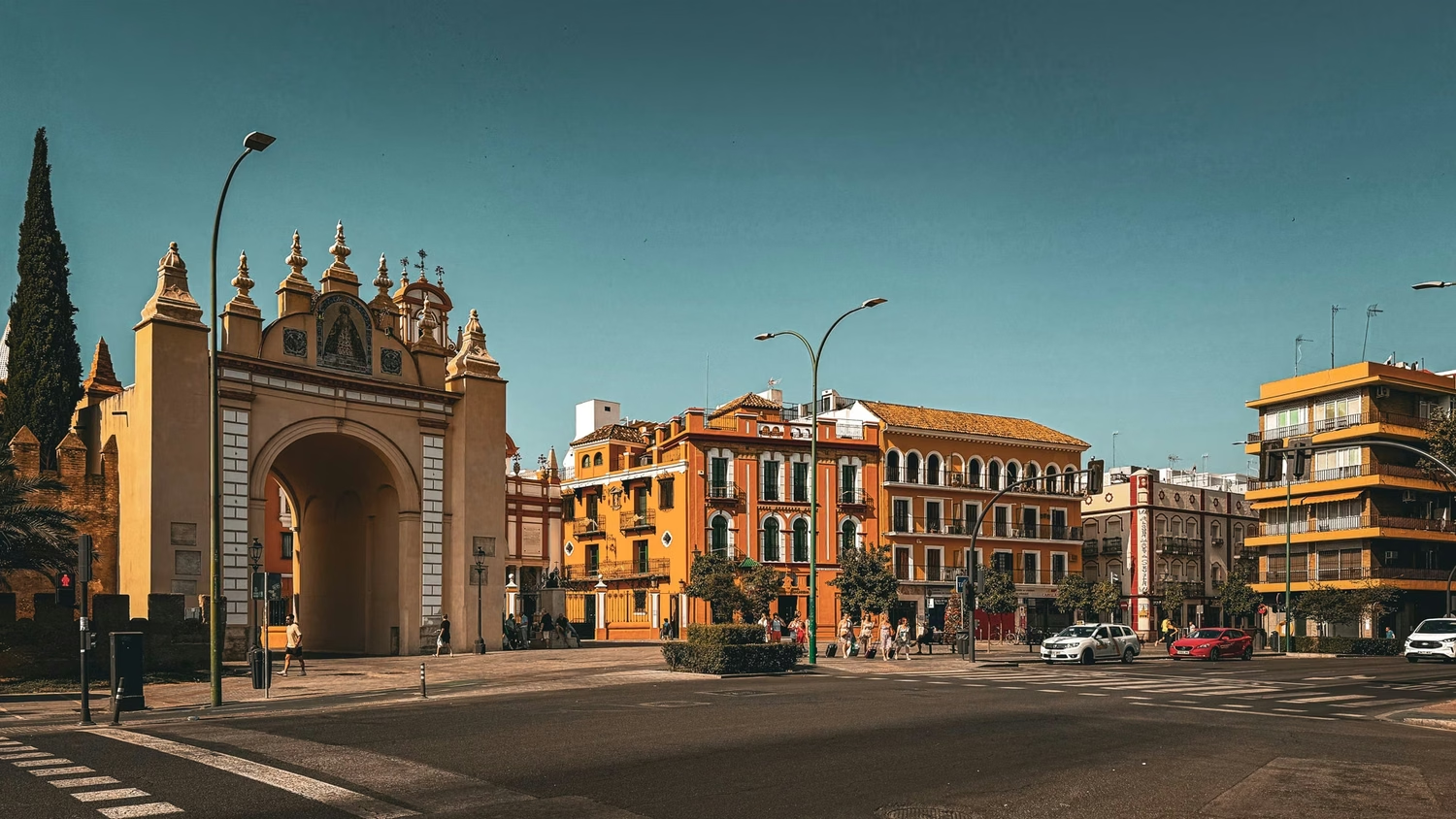
This is where we based ourselves, in a proper traditional barrio north of the centre. It's a bit grimy in places but great value and almost free of tourists. Students and creatives love it for its food and its strong local vibe. The Arco de la Macarena, one of the old city gates, marks its edge. You're a little further out, about a 30-minute walk from the cathedral, but still within reach of everything.
Pros
- More affordable rents and Airbnbs
- An edgy, creative vibe
- Great food options
- Almost no tourists
Cons
- About 30 minutes' walk from the centre
- Less consistent on safety and cleanliness
Rent guide: one-bed long lets from about €650 to €750 a month
Work from: Feria 83 or LATE, both a short walk south
Alameda and Feria
Trendy and sociable
North of the centre, the area around the Alameda de Hércules and Calle Feria is where Seville's cool kids, and a lot of nomads, hang out. It's hip and a bit scruffy in places, with indie cafés and vegan brunch spots on every corner, and at night the Alameda itself is buzzing. If you're looking for community and a bit of grit with your sunshine, this is it.
Pros
- A great social scene and nightlife
- Plenty of laptop-friendly cafés
- Still walkable to the centre
- Home to our favourite café, Feria 83
Cons
- Noisy at weekends
- Some streets feel a bit run-down
Rent guide: one-bed long lets from about €700 to €850 a month
Work from: Feria 83 or LATE
El Centro
Historic and touristy
The old town is the beating heart of Seville, home to the cathedral and the Real Alcázar, with a maze of tiny streets around them filled with tapas bars and flamenco venues. It's stunning and atmospheric, and you can step out of the door into the middle of it all. It's also packed with tourists and pricier than elsewhere, and it has so many holiday flats that the council has stopped issuing new tourist licences here.
Pros
- Stunning architecture and atmosphere
- Walkable to all the major sights
- Plenty of cafés and coworking nearby
- An easy base for a short first stay
Cons
- Noisy and tourist-heavy
- Pricier, often older accommodation
Rent guide: one-bed long lets from about €700 to €850 a month
Work from: Arcadia or workINcompany, both in the old town
Los Remedios
Upscale and residential
Just south of Triana, Los Remedios is quieter and more residential, a popular choice for longer stays and for remote workers who want space and comfort. It has wide streets and modern flats, along with larger supermarkets, and the metro gets you to the centre quickly. There's not much wow factor, but it's extremely practical.
Pros
- Wide streets and modern flats
- Good for longer stays
- Metro access to the centre
- Larger supermarkets and services
Cons
- Lacks charm and excitement
- Not much happening after dark
Rent guide: one-bed long lets from about €750 to €900 a month
Work from: home, or the cafés across the river in Triana
Rent guides are our estimates from idealista's October 2026 district averages for a one-bedroom flat of 50 to 60m². Furnished seasonal lets and Airbnbs usually cost more.
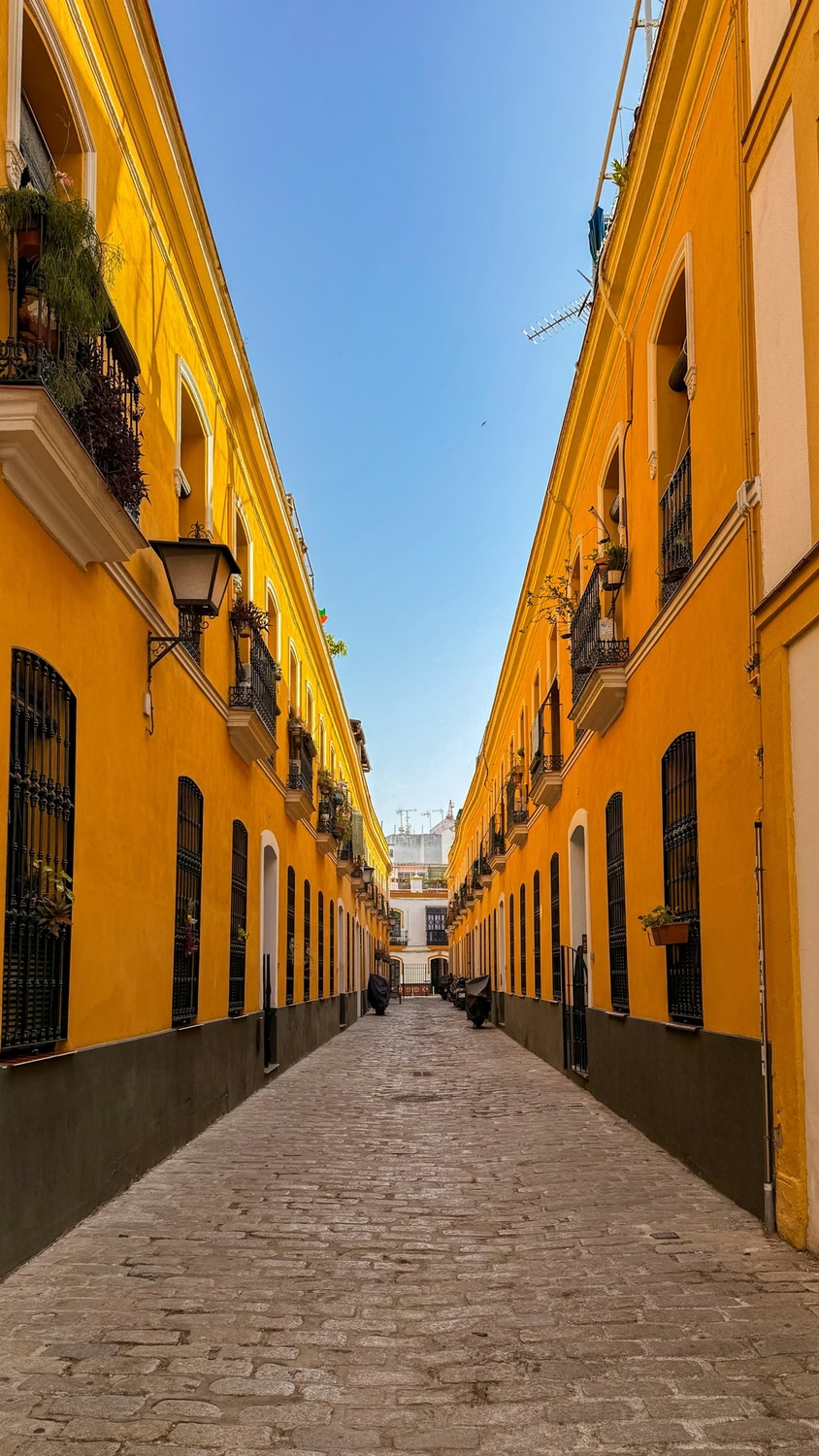
Where to work
Seville has a fantastic café culture, and working from cafés is more accepted here than in some Spanish cities. You'll see plenty of laptops out, and most places won't mind you staying for a few hours as long as you're a good customer. For a proper desk, the city has a couple of dozen coworking spaces, fewer than Valencia or Barcelona but enough to choose from.
Cafés
Feria 83
Calle Feria · Our pick · A brunch café at number 83 Calle Feria, with laptop-friendly tables in the window
Hands down our favourite place to work in Seville, a laid-back brunch café with great coffee and super-friendly service. A couple of laptop-friendly tables right in the window make it perfect for a morning session. It gets busy at weekends, but during the week it's a great place to work for a few hours. The Wi-Fi was solid but a bit slow when we were there, and the food is excellent. It's dog-friendly too, and it treated our pug, Bella, like royalty.
LATE
Calle Amor de Dios · Café and coworking · Specialty coffee at the front, with a coworking space tucked away at the back
A sleek specialty coffee spot with a hidden coworking space at the back, which has proper desks and a quieter feel. The coffee is excellent and the Wi-Fi was lightning fast when we used it. If you're looking for something between a café and an office, this one's ideal.
Coworking
Arcadia Coworking
Old town, Calle Cuna · Day passes from about €15 and desks from about €149 a month, plus VAT
One of Seville's better-known coworking spaces, right in the old town, with the desks and meeting rooms you'd expect and a mix of local freelancers and nomads. It's reasonably priced by European standards, and day passes make it easy to drop in.
workINcompany
Old town, Calle Rioja · Day passes from about €20 and desks from about €170 a month, plus VAT
A solid option with a minimalist feel and a reputation for reliability. It's been around for a while and attracts more established professionals and startups, so it's more corporate than trendy, but it's a dependable place to knuckle down.
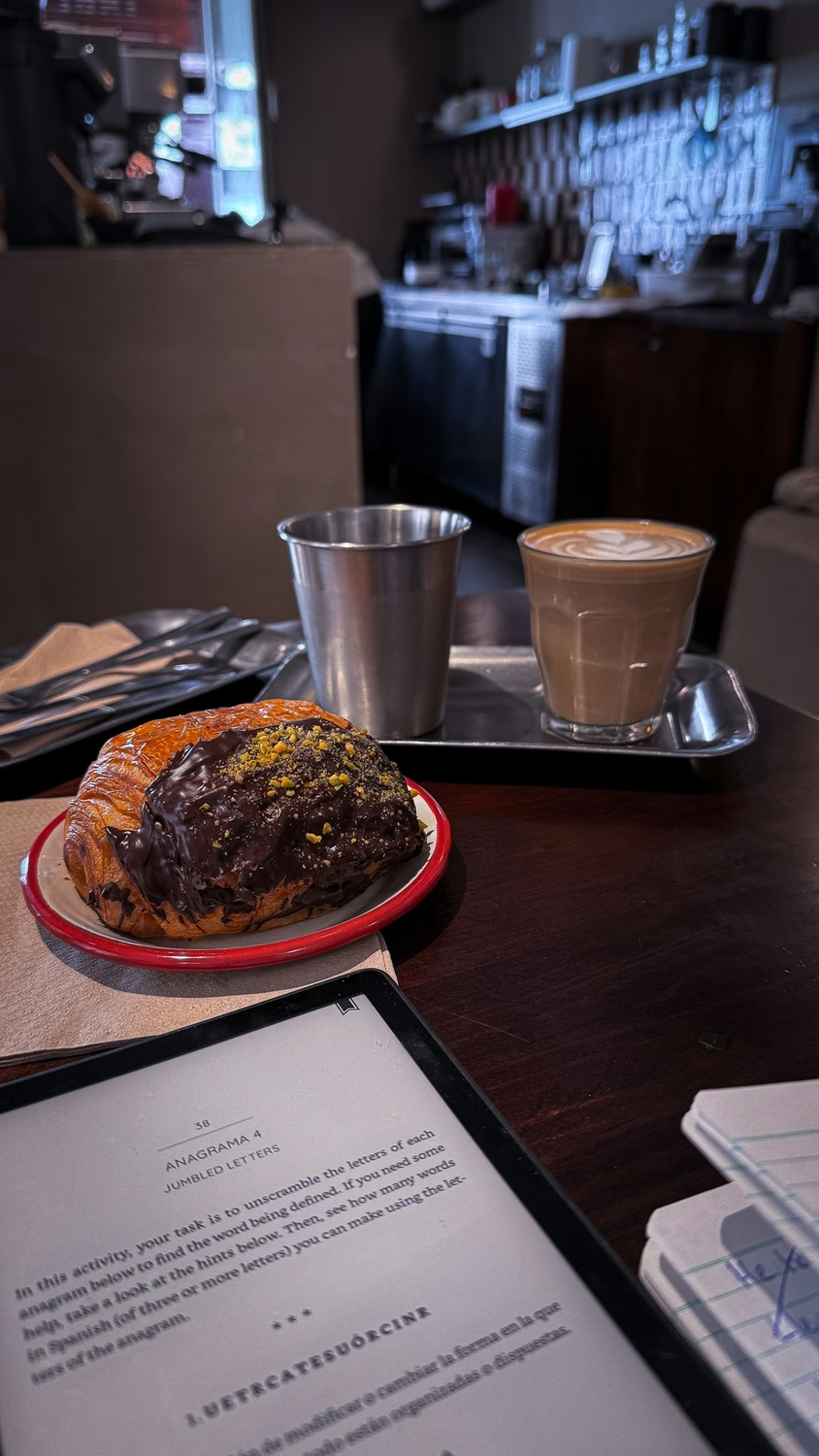
Internet and SIM cards
Fibre is almost universal in Spain, reaching nearly 96% of homes by mid-2025, and we averaged 206Mbps during our stay, which is plenty for video calls. Ask your host for a screenshot of a speed test before you book anyway. For mobile data, we used a Movistar prepaid SIM with 60GB for €10 every 28 days, and budget carrier Digi sells 50GB a month for €7. You'll need photo ID such as your passport to register a prepaid SIM, and if you have an EU SIM, it works here at no extra cost under EU roaming rules.
Food & drink
Seville has one of the strongest food scenes in Spain, built around long lunches and tiny tapas bars tucked down sun-bleached alleys. Tapas is the main event, and moving from bar to bar is the best way to eat. Brunch culture is thriving too, thanks to the city's growing number of remote workers and creative locals.
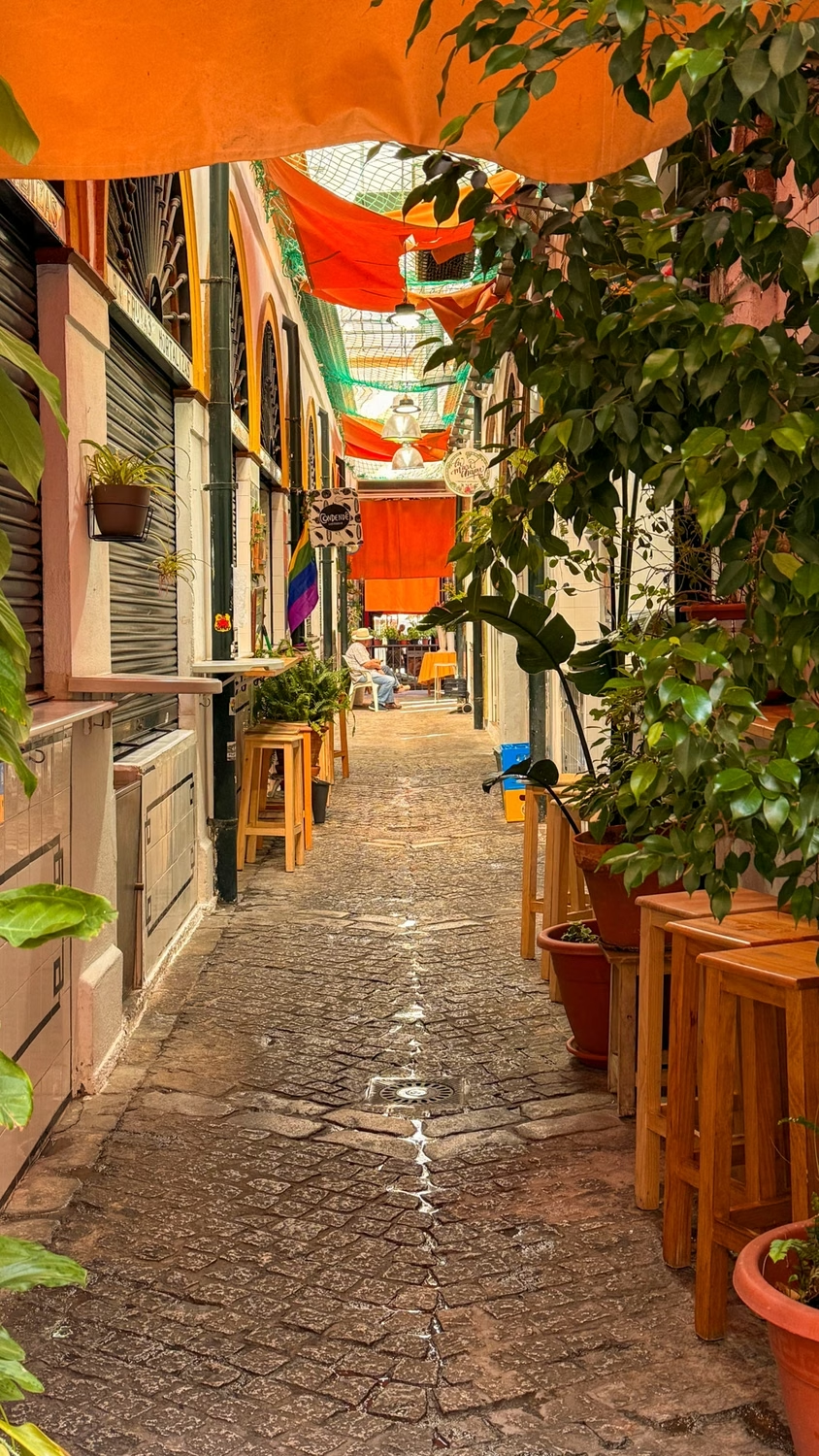
What to eat
- Espinacas con garbanzos: Spinach and chickpeas with garlic and paprika, a Sevillano classic with roots in the city's Moorish and Jewish history, and a great vegetarian option. Try it at El Rinconcillo.
- Salmorejo: A thick, cold tomato soup topped with hard-boiled egg and jamón, like gazpacho's richer, creamier cousin. It comes from Córdoba, but you'll find it everywhere.
- Montadito de pringá: A small toasted roll filled with pringá, the slow-cooked meat left over from puchero stew. Bodega Santa Cruz is known for it.
- Cazón en adobo: Chunks of dogfish in a Moorish-style marinade, fried until crisp and a staple on tapas menus.
- Serranito: A hot sandwich of pork loin and jamón topped with a fried green pepper, which Seville claims as its own invention.
- Jamón ibérico: No introduction needed. Go for the acorn-fed bellota if you want the best, with a cold beer or a vermouth.
- Churros con chocolate: A breakfast treat or a late-night indulgence. Bar El Comercio on Calle Lineros, open since 1904, does the proper old-school version.
- Pan con tomate: Toasted bread with grated tomato and olive oil, the breakfast staple across Spain, best with a strong coffee.
Seville's oranges
Seville's streets are lined with bitter orange trees, with estimates of their number ranging from 25,000 to about 50,000. The fruit is far too sour to eat straight from the tree, and much of the crop goes to Britain, where it becomes marmalade. Look out for vino de naranja, the local orange wine, and for torrijas, bread soaked and fried, which appear in bakeries around Semana Santa.
Where to eat and drink
Our best advice is to use Google Maps reviews religiously. They're reliable for Spain, and plenty of places hyped by blogs and influencers don't live up to it.
- Espacio Eslava: The one everyone talks about, and for good reason. Its modern tapas are beautifully executed but still relaxed, on Calle Eslava in San Lorenzo. Book ahead.
- Bodega Santa Cruz (Las Columnas): A proper Sevillano bar with no frills, just classic tapas done right in a packed, standing-room-only spot on Calle Rodrigo Caro near the cathedral.
- Islamorada Tapas Bar: A tapas bar in the Arenal that's well worth booking. We still dream about the Korean chicken.
- El Rinconcillo: Said to be Seville's oldest bar, open since 1670 on Calle Gerona, and the place to try espinacas con garbanzos.
- Río Grande: Our special mention, on Calle Betis in Triana, with uninterrupted views across the river to the historic centre and the Torre del Oro. The food and service are fantastic, and it's ideal for dinner or a long lunch.
For coffee and brunch, Feria 83 and LATE are our favourites. Mokambo, on Calle Pérez Galdós in the Alfalfa, is a cool little brunch spot, if pricey, and Parcería Café, opposite the Feria market, is great for specialty coffee but a tight squeeze.
Off the clock
Things to see and do
Seville is best enjoyed slowly and on foot, ideally with a coffee or an ice cream in hand. It isn't the place for adrenaline sports, but it packs a remarkable amount into a small footprint, and most of the big sights are within walking distance of each other. In summer, book the sights for first thing in the morning.
Real Alcázar
Our favourite
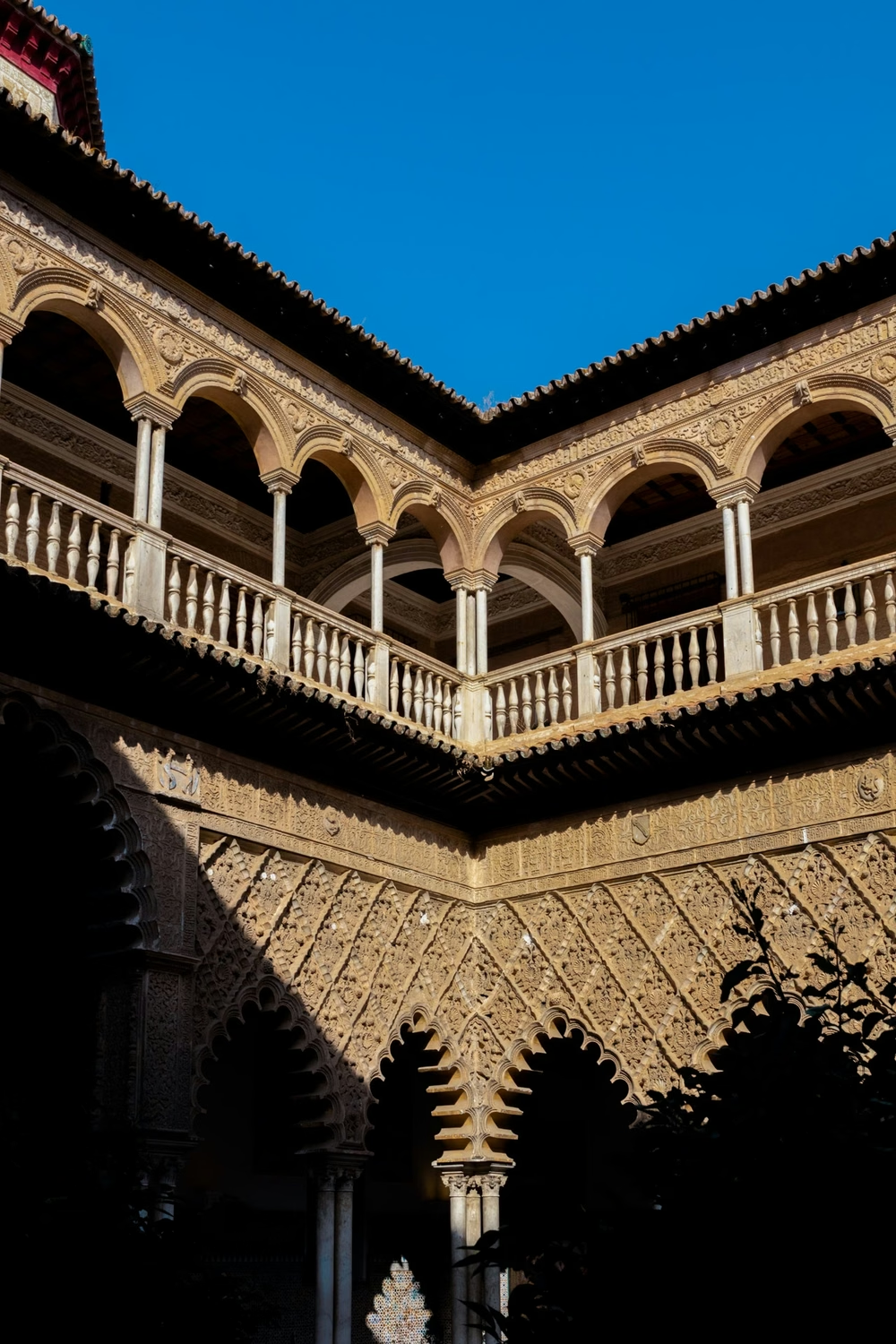
Seville's most impressive sight is a royal palace complex where Moorish and Christian architecture meet, and it's still used by the Spanish royal family when they're in town. It's easy to spend hours among the intricate tilework and lush gardens. Tickets often sell out days ahead, so book online, and for the first slot of the day at 9.30am, arrive by about 9am to beat the queues. Head for the Puerta del León, the Lion's Gate, as searching for the Alcázar on Google Maps can send you to the wrong entrance. Together with the cathedral and the Archivo de Indias, it has been a UNESCO World Heritage Site since 1987.
€15.50 · Book online · Opens 9.30am
Cathedral and La Giralda
Seville's cathedral is enormous, the largest Gothic building in Europe according to UNESCO, and it holds the tomb of Christopher Columbus. The highlight is climbing La Giralda, the bell tower that began life as a minaret. There are no stairs, just 35 ramps, said to have been built so riders could reach the top on horseback, and the views over the city are superb.
€13 online, €14 at the ticket office
Plaza de España and Parque de María Luisa
Our favourite free spot
Built for the 1929 Ibero-American Exposition, the Plaza de España is outrageously photogenic, a vast semicircle of brick and tile with alcoves dedicated to Spain's provinces and a canal you can row along. Star Wars fans will recognise it from Attack of the Clones. Right next door, the Parque de María Luisa is full of shaded walkways and fountains, so bring snacks and settle in.
Free · Rowing boats on the canal
Las Setas
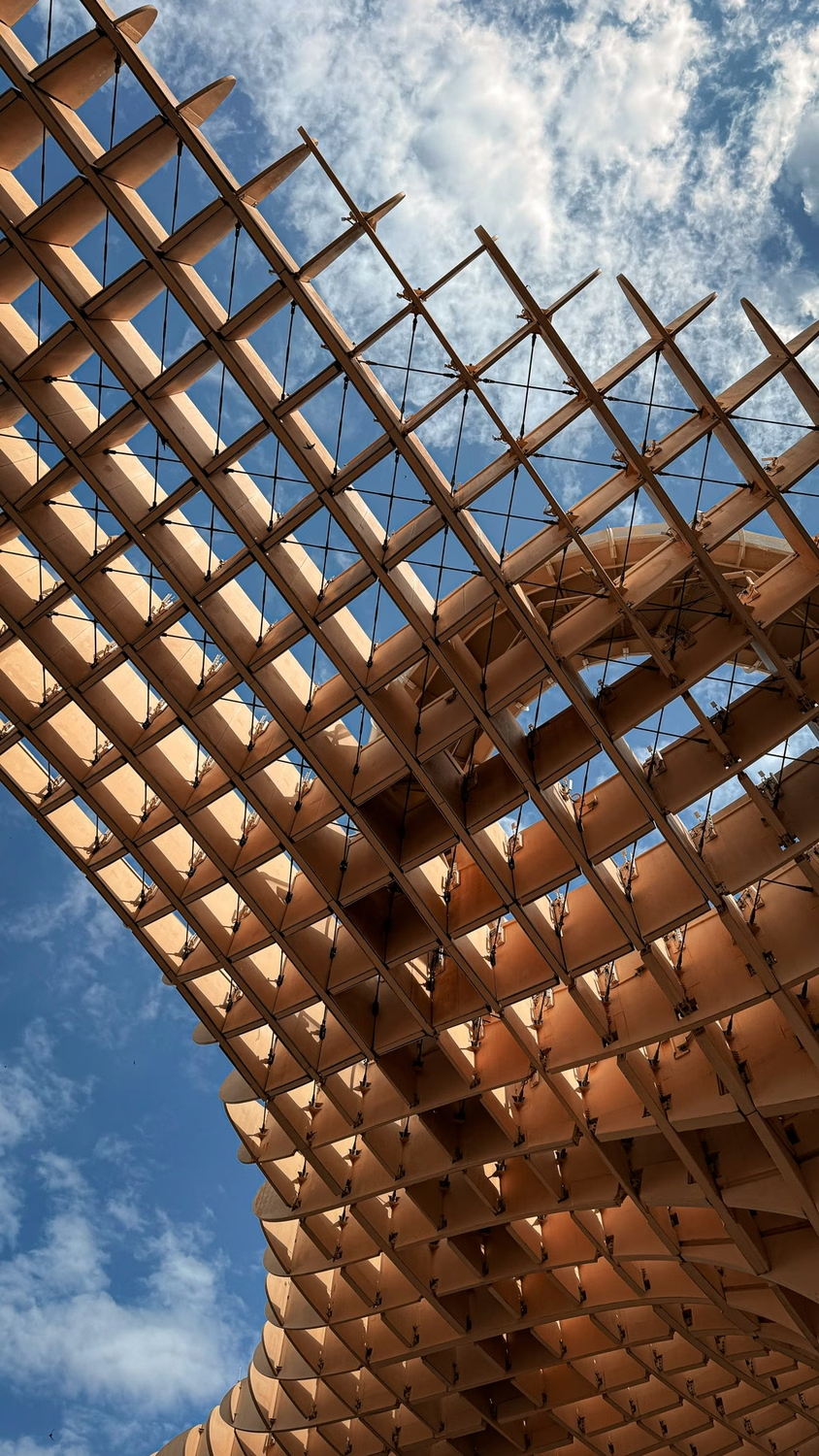
The Setas de Sevilla, officially the Metropol Parasol, is a giant timber canopy over a square in the old town, billed as the largest wooden structure in the world. A walkway winds across the top, and as it stays open until 1am, it makes a good evening outing once the heat has gone out of the day.
From €16 · Daily, 9.30am to 1am
Flamenco in a tablao
Even if you're not usually into dance, flamenco in Seville is something else. The most atmospheric venues are the small tablaos, where you're right up close to the performers, and Casa de la Memoria, on Calle Cuna, is a great choice for first-timers. The Museo del Baile Flamenco, founded by the dancer Cristina Hoyos, also puts on shows.
Casa de la Memoria from €18
Cycle along the Guadalquivir
Seville has one of the best bike lane networks in Spain, and the riverside paths are perfect for a morning ride past bridges and riverside cafés. Our favourite route runs from Triana up to the Parque del Alamillo, a 120-hectare park at the northern end of La Cartuja.
Free with your own bike or a SEVici pass
Museo de Bellas Artes
This underrated museum is housed in a beautiful former convent and showcases Spanish art from medieval times through to the early 20th century. It's not overwhelming, which makes it a perfect way to spend a slower afternoon.
€1.50, free for EU citizens · Closed on Mondays
El Jueves market on Calle Feria
Calle Feria is one of Seville's oldest streets, and every Thursday it hosts El Jueves, a street market with records going back to 1292. It's part junk sale and part antiques fair, and completely chaotic, which makes it great for people-watching or picking up something random. The street is also full of independent shops and cafés, including Feria 83.
Thursday mornings · Free
Triana's market and ceramics
Across the river, the Mercado de Triana stands on the site of the old Castillo de San Jorge and is a great place for a morning wander and a coffee among the stalls. A few streets away, the Centro Cerámica Triana, on Calle Callao, tells the story of the neighbourhood's long tradition of tile-making.
Centro Cerámica Triana €2.10 · Closed on Mondays
Day trips across Andalusia
Seville is a great base for exploring the region. Córdoba and its Mezquita are 42 to 48 minutes away on an Avant train, and Jerez de la Frontera is under an hour, while Cádiz makes an easy day at the seaside at about 1 hour 35 minutes. Granada is a longer trip, at around 2 hours 40 minutes on a direct train.
Córdoba from about 45 minutes · Cádiz about 1 hour 35 minutes by train
Keeping fit
Seville is a brilliant city for staying active, especially if you're not a fan of traditional gyms. It's flat and mostly sunny, and the riverside paths are made for running and cycling, so exercise slips easily into your day. In summer, though, go out at dawn or after dark, as afternoon temperatures make anything strenuous dangerous.
The Guadalquivir riverside
Run · Cycle
Long, wide, tree-lined paths follow the river, and they're ideal for anything from an easy jog to a long run. Head north from Triana and you can keep going all the way to the Parque del Alamillo.
Parque de María Luisa
Run · Walk
Shaded loops on softer ground right next to the Plaza de España, perfect for a gentler run or an early evening walk.
Parque del Alamillo
Run · Cycle
A huge 120-hectare park at the northern end of La Cartuja, popular with runners in the evenings and the end point of our favourite ride from Triana.
Parque de los Perdigones
Walk
Just north of the Alameda, with a big open area that's great for a stroll or a walk with the dog, and views from the nearby Torre de los Perdigones.
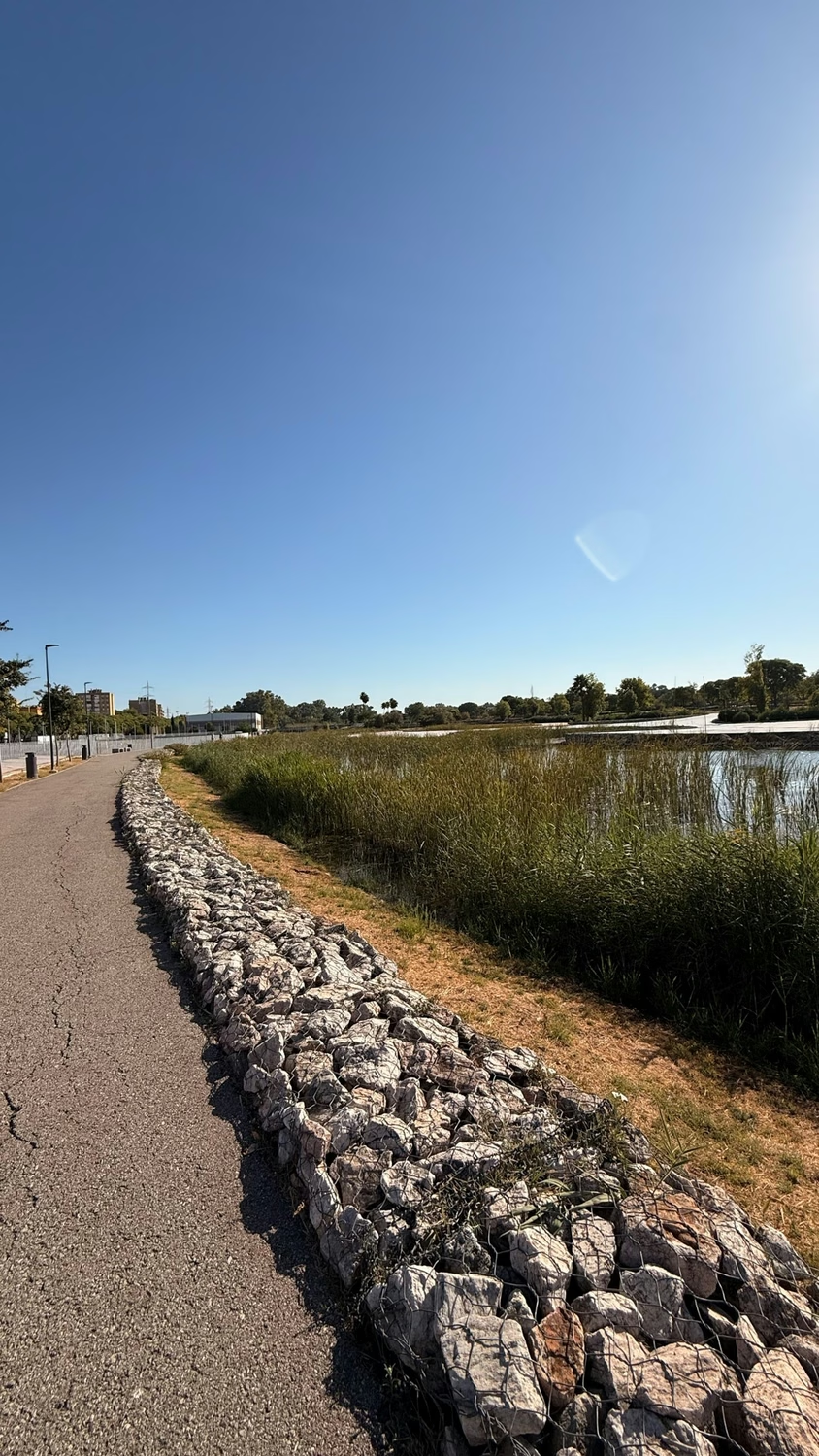
Races, gyms and other ways to stay active
If you're here in the cooler months, enter a race. The Zurich Maratón de Sevilla, on 21 February 2027, is known as one of the flattest and fastest marathons in Europe, while the city's half marathon has been moved to 13 December in 2026 because of the general election.
For gyms, Basic-Fit has 11 clubs in Seville from €24.99 every four weeks plus a joining fee, and VivaGym is another option. Beyond that, the city has everything from rowing and paddleboarding on the river to padel and dance classes, and yoga studios are scattered all over town.
People and community
Seville isn't a top-tier nomad hotspot, and that's part of its appeal. The expat and remote worker community is growing steadily, but there's no big co-living scene and there are fewer organised mixers than in Valencia or Barcelona, so it suits people who are happy to do their own thing and seek out connections. Coworking spaces and the city's expat Facebook and Meetup groups are the easiest ways in.
Locals are warm and welcoming, and a little Spanish goes a long way. Andalusian Spanish is fast and drops plenty of consonants, so don't be discouraged if it takes a while to tune in.
Seville with a dog
We travelled with our pug, Bella, and Seville is extremely dog-friendly. Dogs are welcome on most café terraces, and plenty of shops and restaurants leave water bowls outside. Our favourite green space was the Parque de los Perdigones, just north of the Alameda, while the Alameda de Hércules itself is lined with bars and cafés with outdoor seating where you can sit with your dog. The Parque de María Luisa is great for shady walks, though dogs should officially be on a lead there.
Getting here with a dog is easy from most of Europe. Iberia allows small pets in the cabin up to 8kg including the carrier, and since July 2026 Renfe has let dogs of up to 40kg travel without a carrier on many AVE and long-distance trains for €40, provided you buy an Elige Estándar ticket. Coming from the UK is harder, as you can't fly back into Great Britain with your dog in the cabin, so you'll need to fly it as cargo or return by land and sea.
Tips
Positives
The café culture is top-tier.
Laptop-friendly cafés are everywhere, and many of them welcome dogs too.
It's compact and flat.
You can walk almost everywhere, and almost 200km of cycle lanes cover the rest.
The food is fantastic.
Tapas is the main event, and an evening between traditional bars costs very little.
It's full of history.
The Alcázar and the cathedral are world-class, and the spring festivals are among Spain's best.
It's a great alternative to Madrid or Barcelona.
You get a big city's culture at a gentler pace and a lower price.
Dogs are welcome almost everywhere.
Water bowls outside shops and dogs on café terraces are the norm.
Negatives
Did we mention the heat?
July and August regularly top 40°C, and in 2025 there were 30 days at that level or above.
Uber is overpriced.
Surge pricing is constant, so use local taxis or a bike instead.
Spring gets crowded.
April and May can feel over-touristed, especially during Semana Santa and the Feria.
Driving is frustrating.
Narrow, one-way streets and scarce parking make a car more trouble than it's worth in the city.
The back streets can be pungent.
In the summer heat, some alleys smell of rather more than orange blossom.
The fast trains to Madrid are suspended for now.
The high-speed line had no reopening date in late November 2026.
Tips
Come in spring or autumn.
March to May and October to November give you warm days without the brutal summer heat.
Book the Alcázar early.
Tickets sell out days ahead, so aim for the 9.30am slot and use the Lion's Gate.
Get a Tarjeta Multiviaje.
It cuts the price of a bus trip to €0.41 in 2026.
Take taxis rather than Ubers.
Taxis are usually cheaper, and the airport has a fixed fare of €26 on weekdays.
Make sure your flat has air conditioning.
It's essential from June to September.
Check a café's laptop policy.
Most are relaxed, but ask first and keep ordering.
Use Google Maps reviews.
They're more reliable than blogs and influencer lists for finding good food in Spain.
Book ahead for Semana Santa and the Feria.
Prices jump and the centre fills up between 21 March and 18 April 2027.
Tip the gorrillas or park elsewhere.
A euro or two keeps everyone happy if you drive.
Seville · Overall 8/10
Work setup 7 · Walkability 9 · Value 8 · Safety 8 · Lifestyle 8 · Stayed two months, summer 2025
Working from Seville?
Nomad Register counts your days in Spain against the Schengen 90/180 rule and turns your trip into a request your employer can approve in a click, across 200+ destinations.
Log your Spain trip · For employers
Need sign-off first? Create a free remote work request.
Frequently asked questions
Is Seville good for digital nomads?
Yes, especially outside summer. The café culture is excellent and the city is much cheaper than Madrid or Barcelona. The nomad community is smaller than in Valencia, though, and July and August are brutally hot.
Where should digital nomads stay in Seville?
Triana is our pick for a local feel close to the centre, while the Alameda and Feria area has the liveliest café and social scene. La Macarena, where we stayed, is great value, and Los Remedios suits longer, quieter stays.
How long can I stay in Seville as a tourist?
Most visa-exempt visitors, including British and American citizens, can stay for up to 90 days in any 180-day period across the whole Schengen Area. Days spent in other Schengen countries count towards the same limit, so track them carefully.
Does Spain have a digital nomad visa?
Yes. Spain's digital nomad visa lets remote workers earning at least 200% of the minimum wage, about €3,000 a month from 2027, live in Spain on a residence permit of up to three years if they apply from inside the country, renewable for two years at a time. Our Spain digital nomad visa guide covers the requirements.
How much does it cost to live in Seville as a digital nomad?
Budget around €1,000 a month before rent if you eat out regularly and use a coworking space, plus roughly €650 to €900 a month for a one-bedroom long let in a central neighbourhood. Short lets cost much more, and we paid about €1,400 a month for an Airbnb in summer 2025.
How fast is the internet in Seville?
Fibre is almost universal, and we averaged 206Mbps during our stay. Mobile data is cheap, with prepaid plans of 50GB for €7 a month from Digi or 60GB for €10 every 28 days from Movistar.
Is Seville safe?
Yes. Seville is a safe city where violent crime is rare and the main risk is petty theft in the old town and around Plaza de España. In summer, take the heat seriously and follow AEMET's warnings.
When is the best time to visit Seville?
Spring and autumn, from March to May and in October and November, with May our pick. Avoid July and August if you can. In 2027, Semana Santa runs from 21 to 28 March and the Feria de Abril from 12 to 18 April, when the city is packed.
How hot does Seville get in summer?
Very hot. July and August average highs of 36°C, and in 2025 Seville's airport recorded 30 days at 40°C or more, while a weather station in the city reached 45.2°C during that August's heatwave.
How do I get from Seville Airport to the city centre?
The EA airport bus costs €6 and takes about 35 minutes to Plaza de Armas, calling at Santa Justa station on the way. Taxis charge a fixed fare of €26 on weekdays between 7am and 9pm and €29 at other times.
Can you drink the tap water in Seville?
Yes. Seville's tap water is safe to drink and has a good reputation, so there's no need to buy bottled water.
Is there Uber in Seville?
Yes. Uber, Cabify and Bolt all operate in Seville, but we found Uber expensive and unreliable, with frequent surge pricing. Local taxis are usually cheaper.
Where next
- Valencia: Spain's sunny third city, with the beach a short bike ride from the centre
- Mexico City: one of the biggest nomad hubs in the Americas, with food to match
- Rio de Janeiro: Brazil's beach city, wrapped around forested mountains
- Panama City: a walkable old town and a free stopover on Copa flights
- Spain Digital Nomad Visa guide: requirements, income, tax and how to apply
- All city guides
About this guide
James is the founder of Nomad Register and has been a full-time digital nomad for around two years. He spent two months in Seville in the summer of 2025, working from its cafés with his pug, Bella, in tow. This guide is based on that visit, with facts and prices checked in November 2026. You can read his original trip report on The Nest.
This guide is for general information only and is not legal or tax advice. Visa rules, train services and prices change, so confirm entry requirements with the Spanish authorities or your government's travel advice before you travel.